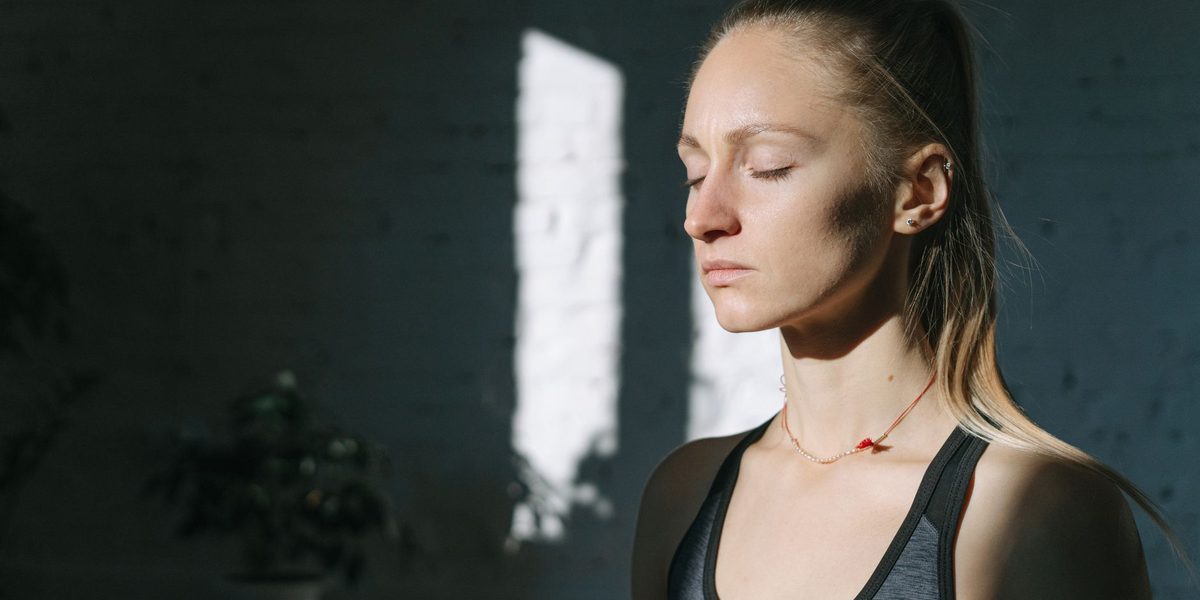
Every caregiver knows the moment: the toddler is howling, the dinner is burning, the phone is ringing, and something in your chest goes tight and hot. What you do in the next sixty seconds shapes the whole scene — whether you steady it or join it. The good news is that steadying yourself in moments like these is a learnable physical skill, not a personality trait. Slow breathing and simple grounding techniques are the most portable tools there are: free, invisible, usable with a baby on your hip. This is a practical guide to using them in real family life — general calming habits for ordinary stress, not a treatment for anything clinical.
Why Breath Is the Handle
When stress spikes, your body launches its ancient alarm response: heart rate up, breathing fast and shallow, muscles braced. Useful for outrunning danger; less useful for buckling a car seat. You cannot order your heart to slow down directly — but breathing is the one part of that alarm system you can steer by choice, and the rest of the system listens to it. Long, slow exhales in particular signal that the emergency is over, and the body begins standing down: shoulders drop, heart eases, the mind gets a little room back.
That is the entire trick, and it is why every calming tradition from yoga to military training converges on the breath. You are not trying to feel instantly serene. You are pulling one lever that is actually connected to the machinery.
Learn One Pattern and Make It Yours
There are dozens of named breathing patterns, and the differences matter far less than picking one and practicing it until it is automatic. Three popular, simple options:
- Long exhale: breathe in comfortably through the nose, then out slowly for longer than you breathed in — say, in for four, out for six. Repeat five times.
- Box breathing: in for four, hold for four, out for four, hold for four. The counting itself occupies a racing mind.
- Physiological sigh: two quick inhales through the nose — a full one topped by a small extra sip — then one long, slow exhale through the mouth. Even one or two rounds takes the edge off.
Try each for a few days and keep the one that feels most natural. The keeper becomes your default: the thing your body does at the first sign of the tight, hot feeling, the way your hand finds the light switch in the dark.
Grounding: Coming Back to the Room
Sometimes the problem is less a racing heart than a spinning head — you are physically in the kitchen but mentally rehearsing every worry at once. Grounding techniques work by pointing your attention at concrete sensory reality, which crowds out the spin. The best known is the five-senses countdown: name five things you can see, four you can hear, three you can touch, two you can smell, one you can taste. It sounds almost childishly simple, and it works precisely because it is — attention aimed at the actual room cannot simultaneously catastrophize.
Faster variants suit chaotic moments: press your feet deliberately into the floor and notice the contact. Hold something with strong sensation — a warm mug, a cold glass, water running over your wrists. Name silently what is actually happening in plain words: the baby is crying, the pasta boiled over, nothing here is dangerous. Plain description is surprisingly powerful; overwhelm inflates events, and stating them flatly returns them to actual size.
Practice in Calm So It Works in Chaos
Here is the step most people skip. A technique first attempted during a meltdown — yours or a child's — is like a fire drill first attempted during a fire. Skills are only available under stress if they were rehearsed without it. So attach one minute of practice to a daily anchor: five slow exhales with the morning kettle, a round of box breathing in the school pickup line, feet-on-floor grounding before you get out of bed.
One minute a day is genuinely enough, because the goal is familiarity, not duration. After a few weeks the slow exhale stops being a thing you try and becomes a thing you do — and in the burning-dinner moment, your body will reach for the trained response before your mind has finished panicking. That is the entire return on the investment: the pause arrives on its own.
Use Doorways, Kettles, and Car Seats as Triggers
Caregiving days rarely offer meditation blocks, but they overflow with tiny built-in pauses, and you can deputize them. Pick two or three recurring moments and quietly assign them a breath: every time you wait for the kettle, one slow round. Every time you buckle a car seat, one long exhale before you start the engine. Every doorway between work mode and home mode, one deliberate breath as you cross it.
These micro-doses matter more than they appear. Stress accumulates across a day in small increments, and these habits vent it in small increments, so it never quite reaches the boiling point that ruins an evening. Caregivers who scatter a dozen single breaths across a day often notice more difference than those who attempt one heroic session a week.
Steady Yourself First, Then the Child
There is a reason airlines say to secure your own oxygen mask first. Children co-regulate — they borrow the nervous system of the calmest adult in the room — which means your slow breath during their storm is not self-indulgence; it is the intervention. A parent who takes three long exhales before responding to a tantrum handles it measurably differently than one who responds from the spike, and the child settles faster against a settled adult.
Do it visibly, and it becomes teaching. A parent who says out loud, I am feeling frustrated, so I am taking three slow breaths, is handing a child a lifelong tool in the only format children reliably absorb: demonstration. Many families end up with shared vocabulary — smell the flower, blow out the candle — that works for four-year-olds and forty-year-olds alike.
Know What These Tools Are and Are Not
Breathing and grounding are everyday steadiness tools for everyday overwhelm: the loud hour before dinner, the too-full Tuesday, the moment before you say something you would regret. They are not a substitute for rest, for a saner schedule, or for support when something deeper is going on. If overwhelm is your baseline rather than your exception — if anxiety is constant, panic-like surges keep arriving, or dread greets you most mornings — those are signals to talk with a doctor or mental health professional. Techniques like these can sit comfortably alongside professional care, but they should never be pressed into service instead of it.
Final Thoughts
You cannot remove the overwhelming moments from a caregiving life, but you can change what happens inside you when they arrive. One breathing pattern practiced daily, one grounding trick for the spinning-head days, a few household triggers to keep the pressure vented, and a willingness to steady yourself first — that modest kit, used consistently, turns the worst minutes of family life from things that happen to you into things you can meet. The storm still comes; you just stop being weather.