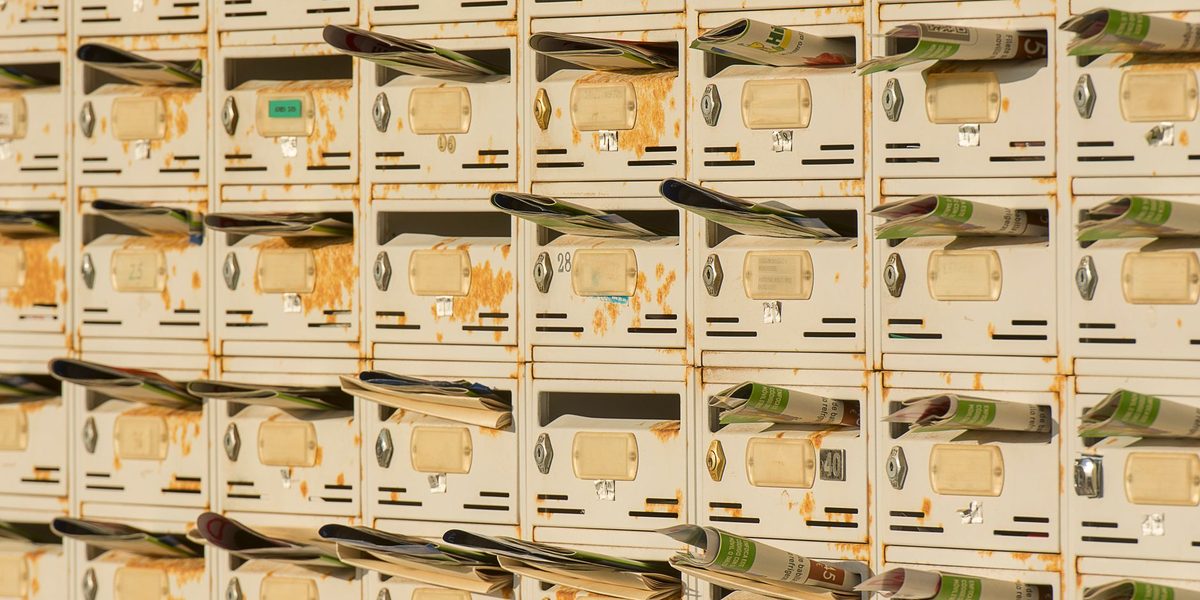
Paper is the strangest clutter a household deals with. It arrives uninvited, nearly every day, through three separate channels — the mailbox, the school bag, and the printer — and each individual piece is so small and flat that keeping it feels free. Then one day the kitchen counter has a geological formation on it, the permission slip is somewhere in the middle stratum, and finding last year's tax document means an evening of excavation. Paper clutter is not a tidiness failure; it is a systems failure. Paper needs what every incoming stream needs: a single entry point, fast sorting rules, a small number of destinations, and a regular emptying rhythm. Build those four things and the piles simply stop forming.
Understand Why Paper Piles Happen
Every pile on a counter is a stack of deferred decisions. The mail gets carried in, glanced at, and set down — not because anyone is lazy, but because each piece poses a small question (act? keep? toss?) and answering questions takes energy that 6 p.m. does not have. The pile is the physical form of I'll decide later.
The fix follows directly from the diagnosis: reduce each decision to a reflex by having so few destinations, so clearly defined, that sorting requires no thought. A household that has to decide where paper goes will pile it; a household where every paper has one obvious slot will file it in passing. Everything below is just the construction of those slots.
Give All Paper One Door Into the House
Rule one is physical: all incoming paper lands in one inbox — a single tray or wall pocket in the household's main traffic zone. Mail goes there the moment it enters the house. School papers go there at backpack-unpacking time. Receipts, flyers, and the mystery forms from every activity go there too. Nothing gets set down anywhere else, and in exchange, nothing is ever lost, because there is exactly one place unprocessed paper can be.
Put a recycling bin directly beneath or beside the inbox, because the most important sorting happens at the door: junk mail, envelopes, catalogs, and expired flyers should never make it into the inbox at all. Standing over the bin while opening mail is the single highest-leverage paper habit in existence — for most households it disposes of half the day's paper in fifteen seconds, unread and unpiled.
Sort With the One-Touch Rules
Processing the inbox is fast when every piece has only four possible destinations, and each has a one-line rule:
- Act: it needs a signature, a payment, a reply, or a calendar entry. It goes in the action pocket — after any date on it is copied to the family calendar immediately, so the paper is a backup rather than the only record.
- File: it is a genuine keep-forever or keep-for-years document. It goes in the to-file pocket, not straight to the archive — filing happens in batches.
- Display: it is short-term reference — the invitation, the practice schedule, the takeout menu of the season. It goes on the board or the refrigerator, and it comes down the day it expires.
- Toss: everything else, which is most things. Into the recycling, with shredding or tearing for anything bearing account details.
The touch-it-once ideal is not always achievable, but the four-slot system gets close: any piece of paper can be routed in under five seconds, which is fast enough to do standing up, coat still on.
Keep the Filing System Almost Insultingly Simple
Elaborate filing is a hobby that masquerades as organization, and it is the second-biggest reason paper systems die: a forty-folder taxonomy makes filing a chore and retrieval a memory test. A family needs perhaps ten to fifteen broad folders — identity documents, home, vehicles, medical by person, school by child, taxes by year, warranties and manuals, finances — living in one file box or drawer. Broad categories mean filing is trivially easy and finding things means flipping through one thin folder, which beats searching forty perfect ones.
Separate the tiny set of irreplaceable documents — birth and marriage certificates, passports, deeds, insurance policies — into a fireproof box or another protected spot, and make sure both partners know where it is and what is in it. Everything else in the archive should pass a simple test once a year: would replacing this be harder than storing it? Old utility bills fail that test; most households can shed a startling amount of archive weight at tax time with ten minutes of pruning.
Build the School-Paper Pipeline
Children generate paper at a rate no adult correspondence can match, and school paper has its own emotional physics — because some of it is homework logistics and some of it is art. Split the stream at the backpack. Administrative paper — forms, notices, schedules — follows the normal inbox route the day it comes home; the calendar copy-out is what prevents the classic morning ambush. Completed work and artwork go to a per-child open bin, kept low enough for the child to feed it themselves.
The bin is where the sentimental decision gets deferred — deliberately and finitely. When it fills, or at each school break, child and parent sort it together for the few keepers, which move to a single labeled keepsake box per child. One box per childhood is a generous and workable limit: when it approaches full, its owner curates. Photographing bulky or borderline pieces before recycling them satisfies most children completely — it is usually the memory, not the macaroni, they want kept.
Give Paper Its Fifteen Weekly Minutes
The system's engine is a short standing appointment — fifteen minutes, once a week, ideally attached to a rhythm the household already runs. The agenda never varies: empty the action pocket (sign the forms, pay the bills, make the calls or calendar entries), move the to-file pocket's contents into the folders, sweep the display board of anything expired, and glance at the kids' bins.
The weekly rhythm is what makes the daily routing honest. Knowing the action pocket gets emptied every Sunday is what makes it safe to drop a bill in there on Tuesday without anxiety — the pocket is a queue, not a grave. Households that skip the weekly session soon stop trusting the pockets, and the counter piles reappear within a month, because the piles were never about space. They were about trust.
Shrink the Inflow at Its Sources
Finally, attack the volume itself. Ten minutes of unsubscribing — switching bills and statements to electronic delivery, opting out of catalogs and marketing mail, asking the school for digital notices where offered — permanently thins the daily stream. Every sheet that never arrives is a decision nobody has to make, this week and every week after.
Be honest about the digital trade, though: an inbox with nine thousand unread emails is the same pile in a different room. Move a bill online only if you will actually see it there, and keep the family calendar as the single place where anything with a date must land, whatever channel it arrived through. The goal is not paperlessness — it is that every piece of information the household needs has exactly one home, and every piece it does not need leaves quickly.
Final Thoughts
Paper clutter surrenders to structure faster than almost any household mess: one inbox by the door, a bin below it, four one-touch destinations, a filing box simple enough to actually use, a pipeline for the school flood, and fifteen minutes a week to keep it all moving. Set the system up in an afternoon and expect it to feel almost suspiciously easy — the piles were only ever deferred decisions, and you have stopped deferring them. The counter stays clear, the permission slip is where it belongs, and tax season becomes an errand instead of an excavation.