Long before children can count past ten, they are watching how the adults around them handle money. They notice who pays at the register, they overhear talk about what the family can and cannot afford, and they absorb the mood that surrounds every transaction. The good news for busy parents is that teaching young children about money does not require lesson plans or lectures. The most powerful financial education happens in ordinary moments — the grocery run, the birthday card from Grandma, the toy aisle negotiation — when a small explanation turns everyday life into a classroom.
Start With What Money Actually Is
To a young child, money can seem like magic: a card taps a machine and treats appear. The first lesson is simply that money is a thing that is earned and then exchanged. Talk out loud about the invisible parts. When you tap your card, say something like, money is leaving our bank account to pay for these groceries. When a paycheck arrives, mention that it came from work. These small narrations demystify the system in a way children genuinely absorb.
Physical coins and bills help enormously at this age because they make an abstract idea concrete. Let your child hold the money, hand it to the cashier, and receive the change. The tactile experience of watching money leave their hand teaches something no tap of a card ever will: when you spend it, it is gone.
Turn the Grocery Store Into a Classroom
The supermarket is the single richest teaching environment most families visit each week. Give a young child one small job with a money angle. Ask them to help you compare two sizes of the same item and guess which is the better deal. Hand them the list and explain that the list is how the family decides what to buy before the store tries to decide for us. Let them hunt for the item with the yellow discount tag.
These games do more than pass the time. They quietly teach comparison shopping, planning ahead, and the difference between what we came for and what is trying to tempt us. A child who grows up playing find the better deal becomes a teenager who instinctively checks prices — not because they were lectured, but because it was always part of how the family shopped.
Let Them Earn, Not Just Receive
Children value money differently when some of it comes from their own effort. This does not mean turning childhood into a job. It means offering small, age-appropriate ways to earn beyond the basic chores expected of every family member. A preschooler might earn a coin for helping match all the socks from the laundry. An older child might earn a little more for washing the car or weeding a flower bed.
The point is the connection between effort and reward. A child who spent twenty sweaty minutes pulling weeds thinks very differently about spending the money that came from that. Suddenly the impulse toy at the checkout costs weeds, and they will often decide it is not worth it — a judgment no parent could have installed by saying no.
Use Three Jars: Spend, Save, and Share
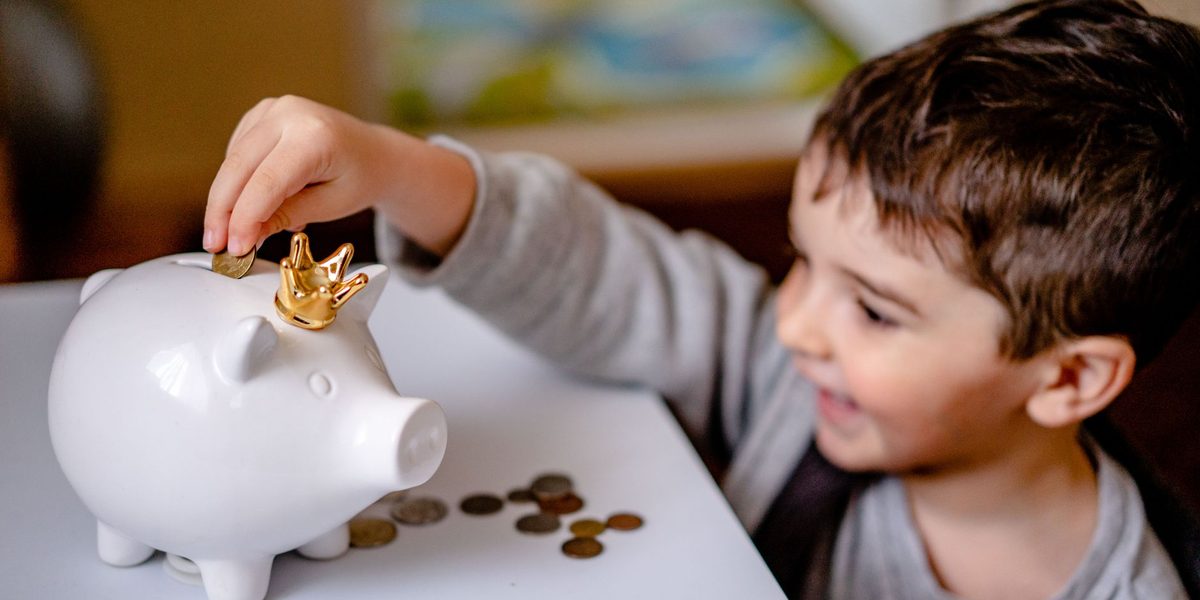
A simple three-jar system gives young children a visible, physical model of what adults do with budgets. When money arrives — allowance, earnings, or birthday gifts — the child divides it among three clear jars:
- Spend is for small treats now, spent however the child likes, mistakes included.
- Save is for a bigger goal the child chooses, like a toy that costs several weeks of patience.
- Share is for giving — a donation, a gift for a sibling, or a cause the child cares about.
Clear jars matter more than fancy ones, because seeing the save jar fill up is the whole show. Tape a picture of the goal to the jar and let your child count the contents as often as they like. The waiting itself is the lesson: wanting something, working toward it, and feeling the pride of finally buying it with your own money is an emotional experience that shapes lifelong habits.
Let Small Money Mistakes Happen
One of the hardest things for a loving parent to do is watch a child spend two weeks of savings on a flimsy trinket that breaks by bedtime. Resist the urge to block the purchase. Within safe limits, small mistakes are the tuition of financial learning, and they are far cheaper at six than at twenty-six.
When the trinket breaks, skip the told-you-so. Instead, help your child put words to the experience: you saved for two weeks, and it broke the same day — how do you feel about that? What might you do differently next time? A child who is allowed to feel mild regret in a supportive environment learns to pause before spending. A child who is always rescued from bad purchases learns only that someone will fix it.
Talk About Wants and Needs Without Shame
The distinction between wants and needs is the foundation of every budget your child will ever make, and young children can grasp it earlier than most parents expect. Make it a casual sorting game rather than a moral lesson. At the store, ask: is milk a want or a need? What about ice cream? What about shoes that fit — and what about a third pair of light-up sneakers?
Keep the tone playful and free of judgment, because wants are not bad. The healthiest framing is that needs come first, and wants are what we plan and save for. Children who hear wants discussed as things worth planning for grow up seeing budgeting as the path to fun, not the enemy of it.
Model the Behavior You Want Them to Copy
Ultimately, children learn most from what they watch you do. Let them see you comparison shop, wait a day before a big purchase, and cheerfully skip something because it is not in the plan this month. Say your reasoning out loud: I really like that jacket, but I am going to think about it for a few days first. That single sentence, overheard often enough, teaches impulse control better than any chart.
It also helps to let children see money handled with calm rather than anxiety. You do not need to hide every financial stress, but young children take their emotional cues from parents. A household where money is discussed in a steady, matter-of-fact voice raises children who approach their own finances the same way.
Final Thoughts
Raising money-smart children is not about one big talk; it is about a thousand tiny moments handled with a little intention. Narrate the invisible parts of spending, let them earn and divide their own money, allow small mistakes to teach their gentle lessons, and model the calm, deliberate habits you hope they will copy. The child who learns at the kitchen table that money is earned, planned, and enjoyed on purpose will carry that quiet confidence into every paycheck of their adult life.