There is a special kind of tired that arrives on Monday morning after a full weekend — the birthday party, the tournament, the errands, the visit, the outing that was supposed to be fun and mostly was. The week exhausted everyone, and then the weekend did too, and now another week begins with the tank still empty. If that cycle sounds familiar, the problem is usually not your family's stamina; it is the quiet assumption that a good weekend is a full one. The slow weekend is the alternative: two days designed for actual recovery, with white space on purpose. Here is how to build one without boring the children or abandoning everything you enjoy.
Notice What Your Weekends Are Currently For
Before changing anything, look honestly at what your weekends have become. For many families they are a second workweek in disguise: errands, kid activities, social obligations, house projects, and the catch-up admin that spilled over from the week — scheduled shoulder to shoulder because the time was theoretically free. Each item earned its place; the total is a family that never actually stops moving.
A useful test: on Sunday night, do you feel restored or relieved it's over? If the honest answer is relieved, your weekends are functioning as overflow capacity for your life rather than as rest, and no amount of better time management within them will fix that. The fix is subtraction — deciding that recovery is one of the things weekends are for, and giving it a real seat at the table.
Protect One Anchor Block of Nothing
You do not have to slow the whole weekend at once. Start by protecting a single anchor block — half a day, ideally the same half each week — where nothing is scheduled and nothing is allowed to creep in. Saturday morning until noon. Sunday afternoon after lunch. During the anchor block there are no errands, no organized activities, no visits, and no house projects; there is just the family at home, doing whatever unstructured thing occurs to each person.
The consistency matters more than the size. When the block recurs weekly, everyone's system learns to expect it — children stop asking what are we doing and start knowing this is the slow part — and the household gets a shared exhale built into its rhythm. Families that keep an anchor block often find it becomes the part of the week everyone quietly guards, including the teenagers who rolled their eyes at it first.
Let Boredom and Puttering Do Their Work
Unscheduled time makes modern parents nervous, mostly on the children's behalf: shouldn't they be doing something? But unstructured hours are not the absence of development — they are where a lot of it happens. Bored children, after the obligatory protest phase, invent games, build forts, draw, read, and dig holes. Puttering adults — tinkering in the garage, repotting a plant, flipping through a cookbook — are doing the adult version of the same thing: low-stakes, self-directed activity that restores rather than drains.
The protest phase is real, especially the first few weekends, and it is worth riding out with good humor rather than a rescue. A prepared response helps — you'll find something, and I'd love to see what — along with visible raw materials: art supplies out, books within reach, a yard or park available. What you are teaching is that empty time is an opportunity rather than an emergency, and that lesson pays out for the rest of their lives.
Batch the Necessary Stuff Into a Container
Slow weekends still exist inside real life: groceries must appear, sports have fixtures, the dripping tap eventually wins. The goal is not to eliminate obligations but to contain them so they stop colonizing both days. Practical containment moves:
- Batch errands into one defined window — say Saturday nine to noon — rather than letting them dot the whole weekend
- Move what you can to weekdays: online grocery orders, a Thursday-evening tidy, admin on lunch breaks
- Adopt a one-big-thing rule: one party, outing, or project per weekend, not one per day per child
- Leave margin around fixed events instead of scheduling right up to their edges
The one-big-thing rule does the heaviest lifting. Most weekend overload comes not from any single commitment but from stacking three reasonable ones, each with its own prep, drive, and recovery tail.
Be honest about house projects too, because they are the most virtuous-feeling invaders of a weekend. A project you genuinely enjoy — puttering in the garden, fixing the shelf at your own pace — can be part of a slow weekend; a project you feel behind on cannot. If the to-do list has been running your Saturdays for months, give it the same treatment as the errands: one contained window, then the tools go down, even if the job is not finished. The house will still be imperfect next weekend. It always is.
Slow the Tempo, Not Just the Calendar
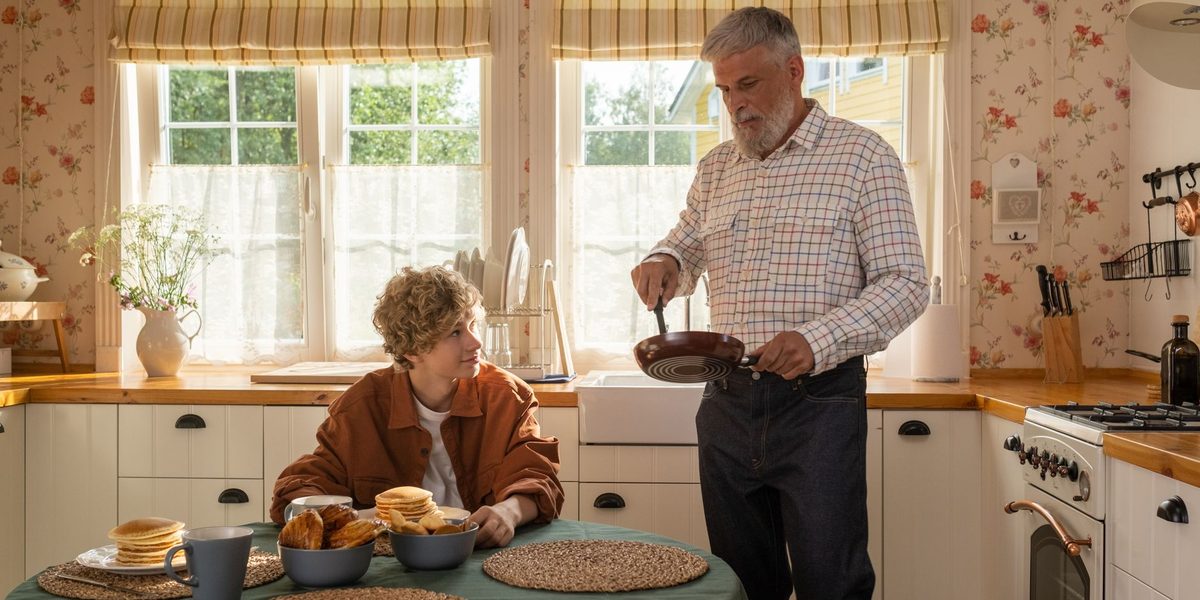
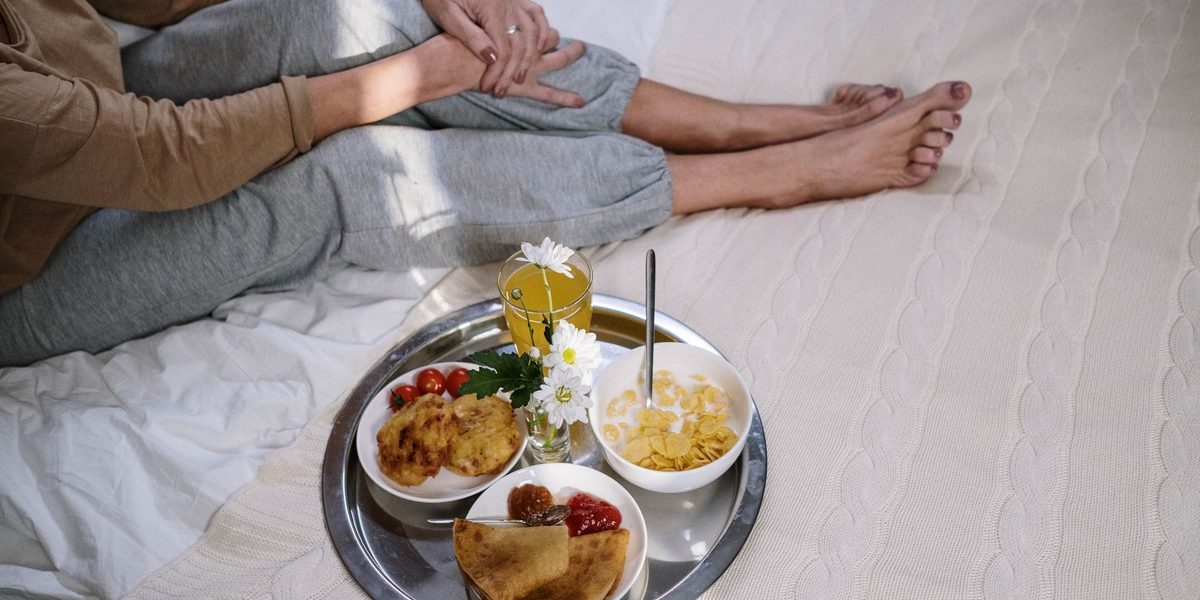
A weekend can be technically empty and still feel rushed if the family moves through it at weekday speed. Slowness is partly a tempo you set, and adults set it. Cook the unhurried breakfast and let everyone eat in pajamas. Take the walk with no destination and let the four-year-old inspect every interesting stick. Say yes to the board game that takes ninety minutes. Let a nap happen to whoever it happens to.
Screens deserve a mention here, because the default drift of an empty weekend is everyone into separate devices — which is rest of a sort, but thin, and it tends to leave people scratchy rather than restored. You do not need a ban; you need a tilt. Screens later rather than first thing, shared films rather than solo scrolling, and enough inviting alternatives lying around that the tablet is a choice rather than a vacuum. A slow weekend where everyone stared at separate screens for two days rarely produces the Monday difference you are after.
Expect Resistance — Including Your Own
Children are not the only ones who find slowness itchy. Many parents discover that they are the restless ones: reaching for the phone, spotting chores, feeling vaguely guilty at rest, as though an unproductive Saturday requires a permission slip. That itch is worth sitting with rather than obeying, because it usually fades within a weekend or two — and its departure is precisely the recovery you were missing. If you truly cannot be idle, putter at something pleasant and call it done; slowness is a spectrum, not a stillness contest.
Outside voices push back too: invitations keep coming, teams add fixtures, relatives have expectations. You do not need to defend your slow weekend philosophically. We're keeping this weekend quiet is a complete sentence, and after a few months of Mondays that feel different, you will not be tempted to trade it back.
Final Thoughts
A weekend has one honest job that no other part of the week can do: return the family to Monday better than Friday left them. Protect an anchor block of nothing, contain the errands, hold one-big-thing as your ceiling, and let the tempo drop low enough for boredom and puttering to work their quiet repair. The full-calendar weekend photographs better; the slow one is the reason your family has something left to give the week. Build it deliberately, defend it cheerfully, and let Monday be the proof.