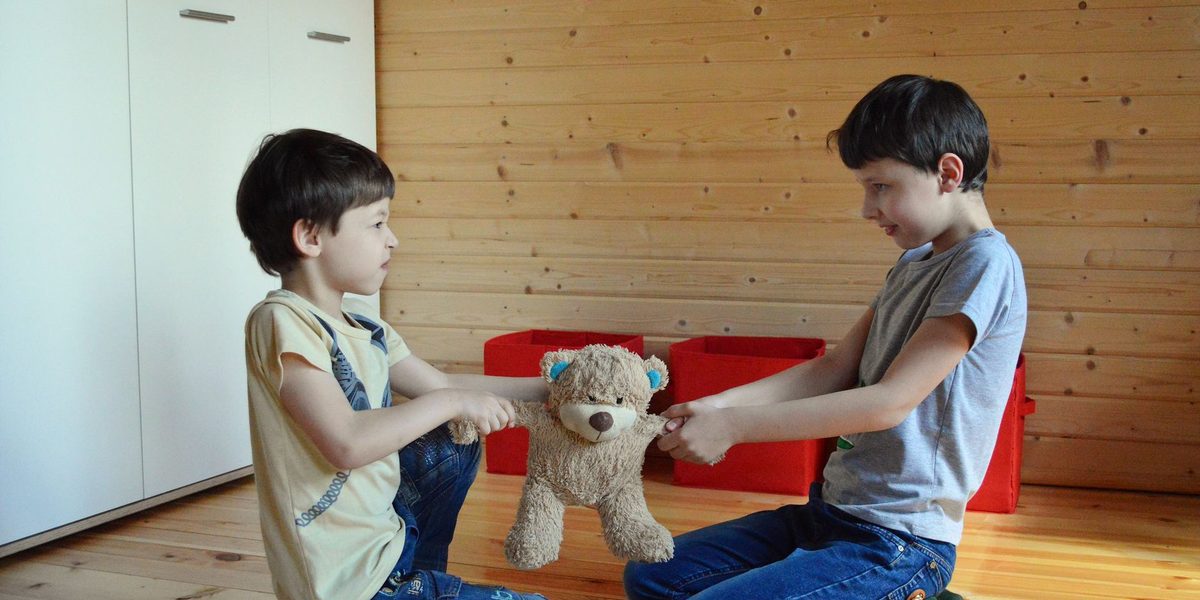
The bickering starts before breakfast, flares up over who touched whose stuff, and somehow ends with someone crying about an incident from three days ago. If your children seem to fight constantly, you are not doing anything wrong, and neither are they. Sibling conflict is one of the most ordinary features of family life, and in small doses it is actually useful. Home is where children first practice standing up for themselves, reading another person's mood, and repairing a relationship after a blowup. The goal is not a house with no arguments. The goal is a house where arguments teach something. That shift in thinking changes what you do when the yelling starts, and it takes a surprising amount of pressure off you as the referee.
Why Siblings Fight So Much
Siblings compete for the scarcest resources in any household: your attention, physical space, possessions, and status. They also spend enormous amounts of time together with no ability to walk away, which is a recipe for friction even between adults who love each other. Add differences in age, temperament, and developmental stage, and conflict becomes almost inevitable. A four-year-old who grabs and a nine-year-old who lectures are both behaving normally for their ages, and both are infuriating to the other.
It helps to notice patterns rather than treating every fight as a fresh crisis. Do the worst battles happen when everyone is hungry, tired, or cooped up? Right after school, when both kids are depleted? When one child has a friend over and the other feels shut out? Constant fighting often has a rhythm, and once you see it, you can change the conditions instead of endlessly policing the behavior. A snack and twenty minutes apart after school can prevent more fights than any lecture.
When to Step In and When to Stay Out
Not every squabble needs a parent. In fact, jumping in too quickly teaches kids that they cannot solve anything without you, and it turns you into a judge whose rulings someone will always resent. A useful way to think about it is in three levels. Ordinary bickering, such as squabbling over the remote or trading insults about who is more annoying, is best ignored or handled from a distance with a calm reminder. Heated conflict, where voices are escalating and neither child can find a way out, calls for you to step in as a coach rather than a judge. Dangerous or cruel behavior, including hitting, throwing things, or targeted humiliation, requires immediate separation and a clear, firm response.
When you do intervene, resist the urge to figure out who started it. You almost never saw the whole thing, and the origin usually stretches back further than either child will admit. Instead of playing detective, describe what you see and hand the problem back: two kids, one screen, and a decision to make. Your job is to keep everyone safe and to keep the conversation moving, not to issue a verdict.
Teach Negotiation Instead of Imposing Verdicts
Children are not born knowing how to resolve conflict, and they will not learn it from being sent to their rooms. They learn it from being walked through the process while emotions are manageable. When you coach rather than rule, the steps look something like this:
- Have each child state what they want, without interruption, while the other listens.
- Ask each one to repeat back what their sibling said, even roughly, so both feel heard.
- Invite them to suggest solutions, and write the ideas down if that helps them take it seriously.
- Let them pick an option both can live with, even if it is not the one you would choose.
- Step back and let the agreement play out, imperfections and all.
The first few rounds will be clumsy and slow, and you may want to scream into a pillow. Stay with it. Every negotiation they complete builds a skill they will use with friends, roommates, coworkers, and someday partners. Over time, you will overhear them working out a trade or a turn-taking scheme on their own, and it will feel like a small miracle.
Drop the Comparisons and the Labels
Few things fuel sibling rivalry like comparison. Remarks such as asking one child why he cannot sit quietly like his sister feel harmless in the moment, but children hear them as a ranking, and rankings breed resentment toward the sibling who came out ahead. Even flattering comparisons do damage, because the praised child now has a position to defend and a rival to defend it against.
Labels work the same quiet mischief. The responsible one, the wild one, the sensitive one, the smart one: these shorthand descriptions harden into roles, and children both live up to them and resent being trapped in them. The child cast as the troublemaker eventually stops trying to be anything else, and the child cast as the easy one learns to hide her struggles. Talk about each child's behavior in the moment instead of their character in general, and praise each one for their own progress rather than their standing relative to a sibling.
Fair Does Not Mean Identical
Kids have exquisitely sensitive fairness detectors, and many parents respond by trying to make everything equal: identical portions, identical bedtimes, identical gifts. This is exhausting, and it quietly teaches children to keep score. It also ignores reality, because a six-year-old and a twelve-year-old genuinely need different things.
A sturdier message is that fairness means everyone gets what they need, not that everyone gets the same. The older child gets a later bedtime because her body needs it; the younger one gets extra help with homework because he is still learning to read. When a child protests that something is not fair, resist the urge to rebalance the scales on the spot. Instead, acknowledge the feeling and restate the principle. You can also ask what they actually need, because often the complaint about a sibling's bigger cookie is really a bid for reassurance that they matter just as much. Answer the real question, and the cookie stops being the point.
Give Each Child Time That Is Only Theirs
A great deal of sibling fighting is really competition for parental attention wearing a disguise. A child who cannot get your attention by being pleasant will happily get it by starting a war, because to a child, even angry attention beats invisibility. One of the most effective long-term remedies for constant fighting has nothing to do with the fights themselves: regular one-on-one time with each child.
It does not need to be elaborate. Ten or fifteen minutes of undivided attention, doing something the child chooses, a few times a week, changes the math. Walk the dog with one kid. Let another help you cook. Sit on the edge of a bed and listen. When each child trusts that their time with you is coming, they have far less reason to fight a sibling for scraps of it. Protect these pockets of time the way you would protect any appointment that matters, because to your child, nothing matters more.
Keep Your Own Reactions in Check
Children learn how to handle conflict mostly by watching how you handle it, including how you handle them. If constant fighting sends you into yelling, threats, or dramatic punishments, the household learns that big feelings get big reactions, and the cycle feeds itself. When you can stay steady, even boringly steady, fights lose some of their payoff.
It also helps to notice what the fighting does to you. If you find yourself dreading time at home or reacting with an intensity that surprises you, that is worth attention, not shame. Parenting siblings is genuinely hard, and talking it through with a partner, a trusted friend, or a family counselor can give you room to respond rather than react. If one child's aggression seems extreme, relentless, or one-sided to the point of bullying, checking in with your pediatrician or a child therapist is a sensible step, not an overreaction.
Final Thoughts
Constant fighting between your kids feels like failure from the inside, but it is usually just childhood, loudly in progress. Step in when safety or dignity is at stake, coach negotiation instead of issuing verdicts, retire the comparisons and labels, define fairness by need rather than sameness, and give each child time that belongs only to them. None of this ends sibling conflict overnight. What it does, slowly and reliably, is turn the daily friction into practice for every relationship your children will ever have, and it lets you trade the referee's whistle for a coach's patience.