Some evenings the house itself seems to have a mood: the television talking over a tablet, a toy siren going off under the couch, every counter stacked with visual to-do lists, three people talking at once, and one adult whose nerves are sanding down to nothing. We tend to blame ourselves in those moments — too impatient, too sensitive — when a good share of the fraying is environmental. Homes have a stimulation level, and when it runs high all day, everyone in the house pays: shorter tempers, harder bedtimes, less rest even during downtime. The encouraging flip side is that a home's stimulation level can be deliberately turned down, and the whole family's wellbeing tends to follow. Here is how.
Understand the Load Your Home Puts on You
Every sound, screen, pile, and flicker in your home makes a small claim on your attention, and attention is exactly what caregiving drains all day. A cluttered counter is a list your eyes re-read every pass; overlapping audio is a conversation your brain half-monitors constantly; a toy that beeps is a tiny recurring alarm. None of these is a problem alone. Together, running all day, they are a tax — and tired adults and melting-down children are often simply over their stimulation budget rather than short on character.
The point is not that stimulation is bad; children need play, music, and cheerful chaos, and a sterile house is nobody's goal. The point is that stimulation should have edges — places and times where it collects, and places and times where it reliably stops — instead of covering every room and every hour like weather.
Start With Sound, the Invisible Clutter
Sound is the fastest lever because it changes instantly. The single most effective household rule is also the simplest: one audio source per room. If the TV is on, the speaker is off; if someone is watching a tablet in the living room, headphones go on. Layered audio is the signature sound of a fraying evening, and unlayering it calms a room within minutes — adults usually feel the difference before they can explain it.
A few more quiet wins: hunt down the gratuitous noise-makers, starting with electronic toys whose volume or batteries can be diplomatically managed; soften the hard surfaces that make every sound bounce — a rug, curtains, cushions do real acoustic work; and lower your own broadcast, since narrating, reminding, and calling across the house from room to room adds more to the din than parents realize. Walking over and speaking quietly is slower and, oddly, faster.
Clear the Visual Noise You've Stopped Seeing
Visual overstimulation is sneakier because you habituate to it — you stop consciously seeing the piles, but your attention keeps paying for them. You do not need a minimalist purge; you need a few calm zones. Pick the surfaces your eyes land on most — the kitchen counter, the dining table, the coffee table — and make just those reliably clear, with everything else allowed its ordinary family mess.
Containers do the heavy lifting: open baskets and bins that let a room go from scattered to settled in five minutes without sorting anything. A toy rotation quietly serves the same goal — most toys live in a closet, a manageable cast is out at any time, and swapping them monthly makes old toys newly interesting while keeping floors survivable. Children, contrary to expectation, usually play longer and more deeply with less out; a wall of options is stimulation, but a shelf of a few is an invitation.
Give the Day Quiet Edges
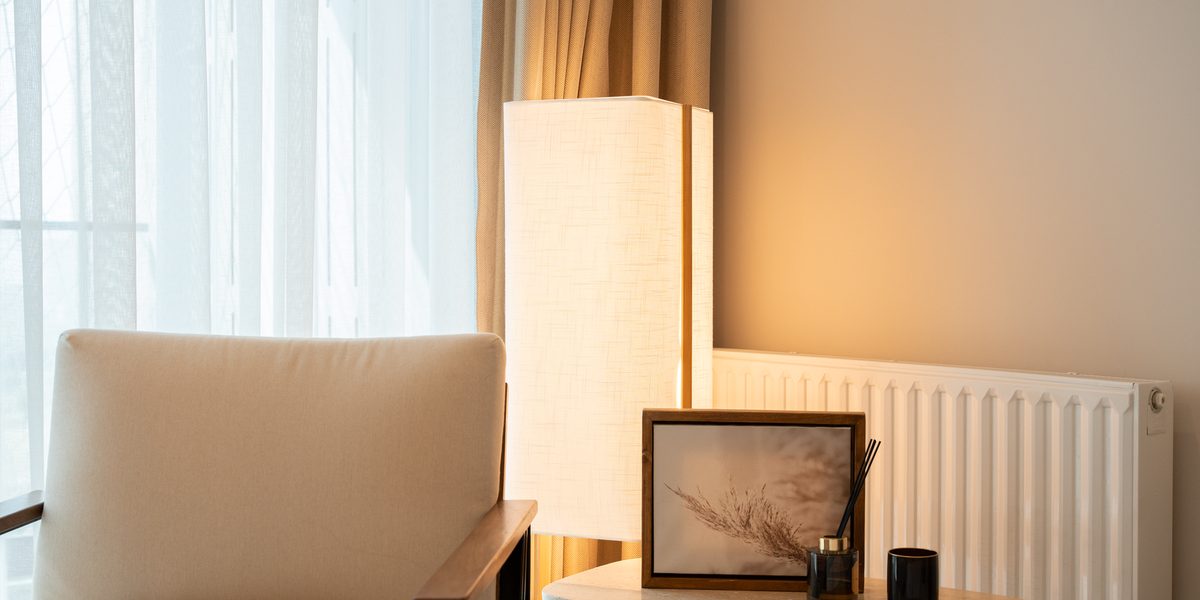
Calm is a rhythm as much as a setting, and the times that matter most are the edges: mornings and the pre-bed hour. Homes that run screens and big energy right up to bedtime are asking children — and adults — to fall asleep at highway speed. Build a downshift into the last hour: overhead lights off and lamps on, screens done, volume settling, activities shifting to baths, books, and quiet play. Lighting is the secret signal here; dimming the house is a wordless announcement that the day is landing, and within a couple of weeks bodies start responding to it automatically.
Mornings deserve a gentler on-ramp too — lights up gradually, no TV in the scramble hour, music only if it soothes. And consider a small daily quiet stretch for the whole household, where everyone does something calm and solo for twenty minutes. Families who keep one describe it as the day's pressure-release valve, and the adults defend it more fiercely than the children.
Create One Low-Stimulation Retreat
Every home benefits from one designated soft place — a corner with cushions, a beanbag and a book basket, a chair by a window — that is understood to be the settling spot. For children, it works best framed entirely positively: not a time-out location, but a cozy base anyone can go to when the house feels like too much. Overstimulated children often cannot name what is wrong; a familiar calm corner gives their bodies a where-to-go before their vocabulary catches up.
Adults need the equivalent and almost never grant it to themselves — claim your own chair, porch step, or bedroom corner, and actually retreat to it for ten minutes when your nerves are filling up. A parent who visibly takes themselves to the quiet spot and returns softer is teaching self-regulation more effectively than any lecture on it.
Get the Family to Run It With You
A calmer home imposed by one adult becomes that adult's exhausting second job; a calmer home run by the household becomes culture. Bring the family in on the why, in plain words — when the house is loud and buried, everyone gets crankier; when it is settled, everyone feels better — and let even small children help choose the rules, because kids enforce rules they helped write:
- One screen or speaker per room
- Five-minute basket reset before dinner, everyone playing
- Lamps-and-lowered-voices hour before bed
- Calm corners are for anyone, any time, no questions
Expect imperfect compliance and drift — school holidays, new toys, and busy seasons will crank the volume back up — and just quietly re-establish the edges when you notice. The aim was never a hushed showroom; it is a family home with a working volume knob, and a household that knows how to turn it.
Notice Who Needs It Most — Sometimes That's You
Stimulation budgets vary person to person. Many households contain one member — child or adult — who wilts faster in noise and chaos, and who blooms disproportionately when the house calms down. If that is you, take it seriously rather than apologizing for it: your sensitivity is real information about what your home needs, and meeting it makes you a steadier caregiver for everyone. And if anyone in the family seems overwhelmed by everyday sensory life to a degree that regularly disrupts sleep, school, or daily functioning, that is worth raising with a doctor rather than solving with lamps alone — home adjustments help everyone, but persistent struggles deserve professional eyes.
Final Thoughts
A home's atmosphere is not fate; it is the sum of adjustable things — the layered audio, the buried counters, the bright bedtime hours, the missing quiet corner. Turn down a few of them and the household's baseline shifts: easier evenings, softer tempers, deeper rest in the same square footage. You cannot make family life quiet, and you would not want to. But you can give the noise edges, and inside those edges, everyone — the kids, the adults, and especially the person who read this far — finally gets somewhere to settle.