Somewhere along the way, self-care picked up a glossy reputation: spa weekends, elaborate routines, expensive retreats. For a parent or caregiver whose days are measured in school runs and snack requests, that version can feel like a joke — one more standard to fall short of. But the original idea of self-care is much humbler and much more useful. It simply means tending to your own basic wellbeing on purpose, in whatever-sized pieces your life allows. This article is a collection of gentle, realistic ways to do that inside a genuinely full family schedule, no spare afternoon required.
Start With the Unglamorous Foundations
The least Instagram-worthy self-care is the kind that actually changes how you feel: eating real meals at roughly regular times, drinking water, moving your body a little, and protecting your sleep. Caregivers are famous for skipping every one of these while making sure everyone else gets them. If your own lunch is usually crusts and cold leftovers eaten standing up, the single most caring thing you can do for yourself this week is to make yourself an actual plate and sit down with it.
None of this requires extra time so much as a decision that you count among the people you look after. Put your own water glass out when you pour the kids' drinks. Go to bed when you are tired instead of scrolling into the second wind. Treat your basic needs as non-negotiable line items, not leftovers, and much of the fancier self-care becomes unnecessary.
Use the Five-Minute Menu
Busy days rarely offer an hour, but they offer fives and tens constantly — while the pasta boils, while the kids are buckled in early, between a nap and a delivery. The trick is knowing in advance what genuinely refills you in that window, because deciding on the spot usually ends in scrolling. Keep a short personal menu somewhere visible:
- Step outside and take ten slow breaths of fresh air
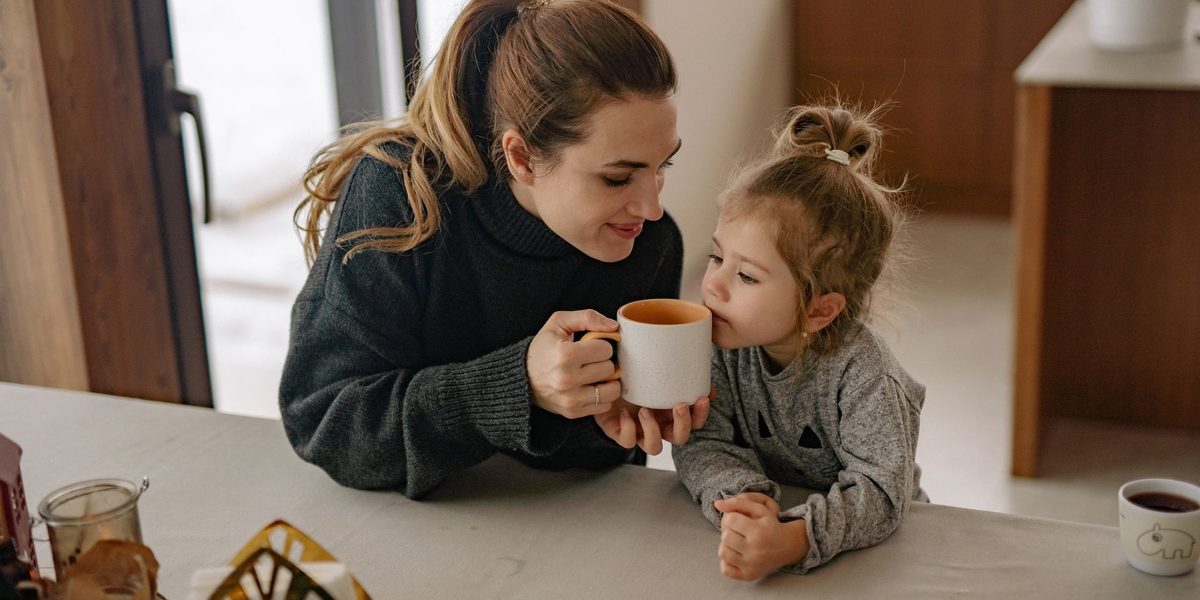
- Make a proper hot drink and drink it while it is still hot
- Stretch your neck, shoulders, and back for three minutes
- Read a few pages of something purely for pleasure
- Put on one song you love and actually listen to it
- Write three lines in a notebook about how you are, not what you must do
Small pleasures taken on purpose have a different effect than the same minutes drifting by. The menu removes the friction, and over a week those little entries add up to something that feels suspiciously like a life of your own.
Stack Care Onto What Already Happens
The most durable self-care hides inside routines you already run. The shower becomes ten minutes with the good soap and the door actually locked. The school run becomes your podcast time. Washing dishes becomes music you chose. Waiting at practice becomes your reading chapter. Nothing new was scheduled, but four points in the day now belong partly to you.
This stacking approach also survives chaos better than standalone plans, because the anchor events happen regardless. A self-care habit attached to making coffee will occur daily; a self-care habit that needs its own slot on the calendar will lose that slot to the first sick day or schedule change. Attach what restores you to what already happens, and consistency stops requiring discipline.
Let Some Care Be Physical Comfort
Caregiving is a physical job — lifting, carrying, crouching, pacing hallways at night — and some of the kindest self-care is simply comfort for your body. A hot bath or shower at the end of a long day. The heavy blanket and the good pillow. Warm socks in winter, a proper chair instead of the floor, the stretch your lower back has been begging for. These sound trivial listed out, which is exactly why so many caregivers never grant them to themselves.
Physical comfort has a psychological echo: treating your body kindly signals to your whole system that you are safe and cared for, which quietly lowers the background hum of stress. You do not need to earn the comfortable option. Take it when it exists. Keep a short list of your own reliable comforts the way you keep one for a fussy toddler — the blanket, the playlist, the particular tea — because a depleted brain is bad at remembering what helps. When a rough day hits, you want the remedy to be a reach away, not a research project.
Keep One Small Thing That Is Only Yours
Beyond the daily maintenance, it makes an outsized difference to keep one ongoing thing in your life that exists purely because you enjoy it — a novel on the go, a garden bed, a sketchbook, a language app streak, a slow-burning craft project. Not for the family, not for productivity, not for self-improvement. Just yours.
The size does not matter; the continuity does. Ten minutes twice a week keeps the thread alive, and that thread does something important for your identity. It means that underneath the roles of parent, partner, and caregiver, there is still a person with interests, taste, and a project. People who keep that thread tend to come back from hard seasons faster, because there is a self waiting for them on the other side.
Say No to Self-Care That Feels Like Homework
Not everything sold as self-care will care for you. A complicated morning routine you dread, a journal you guiltily neglect, a class that adds another logistics burden — if a practice consistently leaves you more depleted or more behind, it is not self-care for you, whatever it is for someone else. The test is simple: afterwards, do you feel a little more like yourself, or a little more like you failed at one more thing?
Give yourself permission to quit wellness activities that do not fit your season. The caregiver version of self-care is ruthlessly practical. It keeps what restores, drops what performs, and refuses to let rest become another arena for achievement.
Ask for the Time Without Apologizing
Almost every idea above fits inside a normal day, but you will still sometimes need actual, protected time — and that usually means asking for it. Ask plainly: I need an hour on Sunday; can you take the kids to the park? Trade with a partner, a relative, or another parent so everyone gets a turn. Skip the apology and the elaborate justification. You are not asking a favor against the family's interests; you are doing routine maintenance on one of the family's most essential people.
If asking feels impossible — if there is truly no one, or the guilt is overwhelming, or exhaustion has stopped responding to rest at all — treat that as a sign the load itself needs attention. Sometimes the answer is structural help, and sometimes it is a conversation with a doctor or counselor. Persistent depletion that nothing touches deserves professional support, not a better bath.
Final Thoughts
Gentle self-care is not a reward for finishing the list, and it is not a production. It is eating the real lunch, taking the five minutes, keeping the one small thing that is yours, and asking for the hour without apologizing. Fit care into the life you actually have, rather than postponing it for a life with more room, and you will find that the full schedule and the cared-for self can coexist — imperfectly, but reliably, which is what matters.