Every parent knows the impulse. Your child reaches for something just beyond their ability — a high rung, a hard word, a tricky friendship — and every instinct says step in, smooth it over, spare them the fall. The impulse comes from love, and in genuine danger it is exactly right. But when stepping in becomes the default response to every wobble, children absorb a quiet message: you cannot handle this without me. Resilience, the capacity to recover from setbacks and keep going, is not a personality trait some kids are born with and others are not. It is built, rep by rep, through manageable struggle. The parent's job is not to remove the struggle but to keep it manageable.
Why Rescue Feels Right and Often Isn't
Rescuing works beautifully in the short term, which is what makes it so seductive. The tears stop, the argument ends, the forgotten homework gets driven to school, and everyone's afternoon improves. The costs are invisible and deferred. A child who is consistently rescued never gets to discover that frustration passes, that problems have more than one solution, or that they are the kind of person who figures things out.
There is also a subtler cost. Children read our rescues as information about themselves. When a parent leaps in at the first sign of difficulty, the child reasonably concludes that difficulty is dangerous and that adults doubt their ability to cope. Over years, that conclusion can harden into anxiety and avoidance. The kindest thing a parent can often do is stay warmly nearby, visibly confident, and let the moment be hard.
Let Kids Struggle Safely
The useful concept here is safe struggle: challenges where the stakes are low, the difficulty is real, and the child owns the outcome. A five-year-old wrestling with a zipper, an eight-year-old negotiating with a friend over game rules, a twelve-year-old managing a big project deadline — these are not problems to be solved for children. They are the curriculum.
The skill for parents is calibration. If a task is so far beyond a child's ability that failure is guaranteed and crushing, scaffold it down. If it is within reach with effort, hold back and tolerate the whining. A good internal question is: what is the worst realistic outcome here? A missed assignment, an awkward conversation, a lost soccer game, and a cold walk to the bus after dawdling are all survivable — and instructive. Genuine physical danger, cruelty, or situations a child truly cannot influence are different; those deserve adult intervention without apology.
Make Room for Age-Appropriate Risk
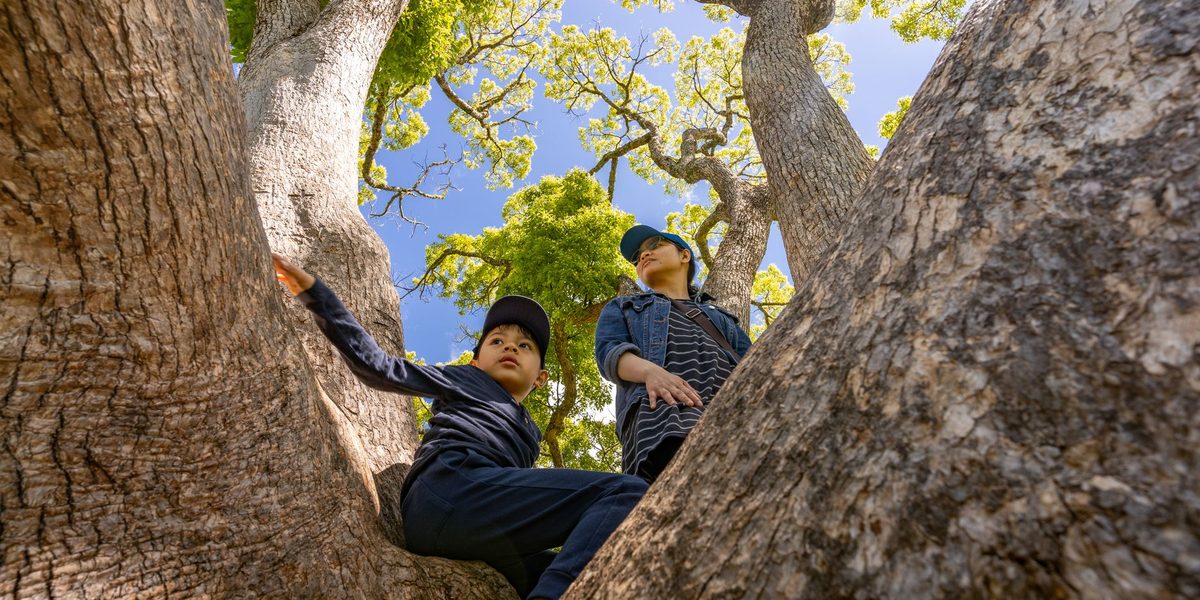
Physical confidence and emotional confidence grow from the same root: the experience of doing something slightly scary and coming through it. Climbing higher than feels comfortable, walking to a nearby friend's house, using real tools under supervision, ordering for themselves at the counter, staying home alone for a short stretch when they are ready — each of these stretches a child's sense of what they can handle.
Families differ, and neighborhoods differ, so the specifics will vary. The principle does not: expand the boundary a little at a time, in step with demonstrated ability, rather than holding it fixed until some imagined age of readiness. Children who never practice independence do not magically acquire it at eighteen. If watching makes you nervous, that is normal — manage your own discomfort out of their sightline rather than transferring it to them with a stream of "be careful" warnings. A more useful phrase is specific and capable-sounding: "Notice how that branch bends" or "Do you feel steady?"
Coach Through Failure Instead of Erasing It
When a child fails — the tryout, the test, the friendship, the audition — parents tend toward two errors. The first is minimizing: "It doesn't matter, that coach doesn't know anything." The second is catastrophizing alongside them, treating the setback as an emergency requiring adult correction. Both moves rob the failure of its value.
Coaching looks different. First, allow the feelings without rushing them; disappointment is not a problem to fix, it is an emotion to feel. Sit with it. Then, once the storm passes — hours later, maybe a day — get curious together. What happened? What was in your control, and what wasn't? What might you try differently? Finally, express confidence in the child rather than in a guaranteed outcome: "I don't know if you'll make it next season, but I know you can do the work to get better." That distinction teaches kids their worth is not attached to results.
Watch the Self-Talk You Model
Children learn how to talk to themselves by listening to how their parents talk about themselves. A parent who narrates their own mistakes with contempt — "I'm such an idiot, I always mess this up" — hands the child that script. A parent who narrates recovery — "Well, that didn't work. Annoying. Okay, what's plan B?" — hands them a different one.
You can make this deliberate. Let your kids see you attempt things you are not good at. Let them hear you be nervous before something and debrief honestly after. Tell the occasional story about your own failures at their age and what happened next, keeping it brief and true rather than turning it into a fable with a bow on it. Resilience is caught at least as much as it is taught, and the household soundtrack matters.
Hold Expectations Steady With Warmth
Resilience research and long practical experience point the same direction: children do best with parents who are both demanding and warm. Expectations without warmth feel like pressure; warmth without expectations feels like pity. Together they say: this is hard, I believe you can do it, and I am with you.
- Keep chores and family contributions non-negotiable, even when schedules are full.
- Let natural consequences arrive when they are safe — forgotten cleats mean sitting out practice.
- Praise effort, strategy, and persistence in specific terms, not just outcomes or talent.
- Resist re-doing their work — the wobbly ponytail and the lumpy bed are theirs.
- When they say "I can't," try adding "yet" and asking what the first small step might be.
None of this requires harshness. You can hold a line and hug a frustrated kid at the same time. In fact, doing both at once is precisely the combination that builds durable confidence.
Know When Struggle Needs Backup
Letting kids struggle is not a universal prescription. Some challenges are too big for a child to carry alone: persistent bullying, learning difficulties, grief, anxiety that swallows daily life, or changes in sleep, appetite, and mood that last for weeks. Resilience does not mean toughing out everything; part of being resilient is knowing when and how to ask for help.
Model that too. If your child seems stuck in distress rather than moving through it, bring in reinforcements — a teacher, a pediatrician, a counselor or other qualified professional. Framing help-seeking as a strong move rather than a last resort may be one of the most valuable resilience lessons you ever teach.
Final Thoughts
Raising resilient kids in a protective age mostly means resisting your own reflexes: the reflex to warn, to fix, to smooth, to carry. Children do not need a life free of falls. They need a hundred small falls with a calm adult nearby, a chance to get up on their own, and the growing inner certainty that they can. Give them the struggle, keep it safe, and stay close. That combination — not the absence of hardship — is what sends a capable person out your front door someday.