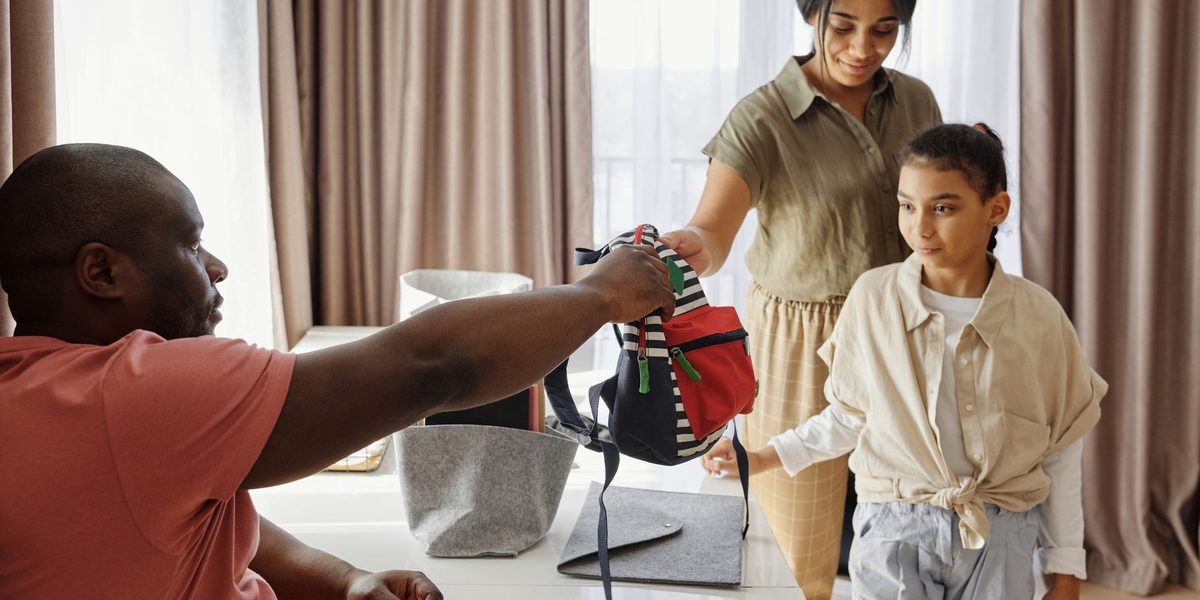
Every year it arrives with the same choreography: the supply list from school, the displays of backpacks and markers, the sudden conviction that every child needs a full new wardrobe by the first bell — and, a few weeks later, the bank statement that makes parents wince. Back-to-school has quietly become one of the biggest spending events on the family calendar, rivaling the winter holidays in many households. But unlike a true emergency, this spike is utterly predictable, heavily marketed, and highly compressible. Families who approach it with a system instead of a mood routinely spend far less — and start the school year calmer for it.
Shop Your Own House First
The single highest-return hour of the entire season is an inventory sweep before you buy anything. Empty the backpacks from June — they're archaeological sites of usable supplies. Check the desk drawers, the craft bin, last year's pencil case, the closet shelf where half-used notebooks go to be forgotten. Most families discover they already own a startling share of the list: scissors, rulers, binders that need nothing but a wipe, dozens of pencils, glue sticks still sealed.
Do the same with clothes. Try things on — kids grow unevenly, and the pants that quit may sit next to shirts with a full year left. Make two lists from this audit: what we have, and what we genuinely need. Everything that follows works from the needs list, and the needs list is always shorter than the store hopes.
Set the Number and Say It Out Loud
Back-to-school spending balloons because it's open-ended — a season of accumulating purchases with no agreed ceiling. Close the loop: decide the family's total before the first store visit, split it per child, and tell the kids the number that concerns them. A budget announced is a budget with witnesses.
Better yet, make it a named fund all year. Divide last year's back-to-school total by twelve and set that aside monthly; when August arrives, the money is waiting and the season becomes an errand rather than a financial event. Families who fund it this way describe the same shift they get from any sinking fund: the spending is identical in size but completely different in feeling.
Stagger the Shopping — the First Day Isn't a Deadline
Retail works hard to compress all back-to-school buying into a few frantic weeks, because frantic shoppers pay full price. Resist the funnel. Kids genuinely need for day one is a short list: the supplies the school requires immediately, shoes that fit, and a few outfits. The rest can wait — and waiting pays twice.
First, prices on remaining stock often drop hard once the season peaks. Second, waiting reveals real needs: the teacher who wanted a specific binder, the gym schedule that determines the shoes, the trend that evaporated by October. Buying autumn clothes in August is especially wasteful — the weather won't want them for weeks, and growing kids may not fit them by the time it does. Spread the spending across the season, and buy winter gear when winter is actually coming.
Give the Kids the Budget, Not the Wishlist
The fastest way to end the checkout-line lobbying is to change the game: hand each child their clothing-and-extras budget as a number they manage. Suddenly the hundred-dollar sneakers stop being a fight with you and become arithmetic with themselves — those shoes, or three other things they wanted.
- Younger kids can choose within limits: pick two of these three notebook designs.
- Middle schoolers can own a category — this is your clothes number, spend it your way, with veto rights reserved for necessities skipped.
- Teens can run the whole list, receipts and all, and many become startlingly frugal the moment the money feels like theirs.
This converts the season from a negotiation into a masterclass. The child who blows the budget on one item and lives with the consequences for a semester learns more about money than a year of parental lectures could deliver — at a tuition cost you were going to spend anyway.
Know the Marketing Traps by Name
The back-to-school aisle is engineered, and knowing the tricks defuses them. New year, new everything is the master narrative — but a functioning backpack does not expire in June, and refills cost pennies against replacements. Bundles and kits sell convenience with items you already own hiding inside. Limited time urgency pushes you to buy the whole list at peak price. Character-licensed versions of everything charge a premium for a sticker your child will disown within a year or two.
None of this makes occasional new-and-fun purchases wrong — a fresh pencil case can carry real first-day joy at trivial cost. The skill is choosing your splurges deliberately: one or two items where new matters to your child, and quiet frugality everywhere they won't notice or care.
Buy Quality Where It's Used Daily, Cheap Where It Isn't
Not all school purchases deserve the same strategy. The items that take daily abuse — the backpack, the shoes, the lunch container, the winter coat — reward buying sturdy, because replacing cheap versions twice costs more than buying decent once. The items that get lost, mangled, or abandoned regardless of quality — pencils, erasers, glue, folders — should be bought as cheaply as multipacks allow, with a reserve stash at home so October's lost pencil doesn't trigger a store trip.
Secondhand deserves a bigger role than it usually gets, especially for fast-outgrown categories. Barely-worn kids' clothes, outgrown sports gear, and even high-quality backpacks flow constantly through consignment shops, school swap events, and neighborhood groups. Older kids' brand sensitivities are real, but many teens have discovered thrifting on their own — meet them there. And when your own children outgrow quality gear, sell or swap it forward; the proceeds feed next year's fund, and the cycle keeps every family's costs down.
Debrief in September and Write It Down
The season's final step is the one nobody does: a fifteen-minute review once school has settled. What did we buy that never got used? What did we miss? What did the season actually cost, category by category? Which purchases were worth it and which were August adrenaline?
Write the answers somewhere you'll find them next July — a note on your phone works. Next year's inventory sweep starts from this list, next year's budget number comes from this total, and next year's mistakes shrink accordingly. Back-to-school comes every single year; a family that learns from each round eventually runs the whole season on rails, at a cost that would astonish the family panic-shopping beside them in the aisle.
Final Thoughts
Back-to-school spending feels like a force of nature, but it's really a marketing season colliding with parental love — and both respond well to a plan. Inventory before buying, set the number out loud, stagger purchases past the August peak, hand kids real budgets, splurge deliberately instead of reflexively, and take notes for next year. The kids still walk in on day one equipped and confident; the difference is invisible to them and very visible on the statement. And the deepest lesson isn't about supplies at all — it's a houseful of children watching, year after year, how a calm family meets an expensive season: with a list, a number, and no panic whatsoever.