Every household already has a command center; the question is whether it was designed or just happened. In the undesigned version, the schedule lives in one parent's head, the permission slips live in a backpack, the mail lives in a slow avalanche on the counter, and the keys live wherever they were last flung. Information requests get routed through a single human being — Mom, where is…? What time is…? Did anyone sign…? — who eventually wears out. A deliberate family command center replaces that human router with a wall: one visible place where the household's schedule, papers, lists, and launch gear live. Building it takes a weekend. Making it stick takes a few honest habits.
Location Decides Everything
The command center works only if it sits directly in the family's natural traffic. For most homes that means the kitchen or the passage between the entry and the kitchen — the place everyone drifts through with their coffee and drops things on their way in. A beautifully organized station in the home office or a quiet hallway will die within a month, because nobody's daily path touches it, and a command center off the path is just wall décor with pockets.
Watch your family for a day before choosing. Where does the mail actually land now? Where do the backpacks fall? Where do people stand while asking what is for dinner? That spot — the one already collecting the chaos — is where the command center belongs, because you are not trying to change the traffic. You are putting infrastructure under it.
The Calendar Is the Heart
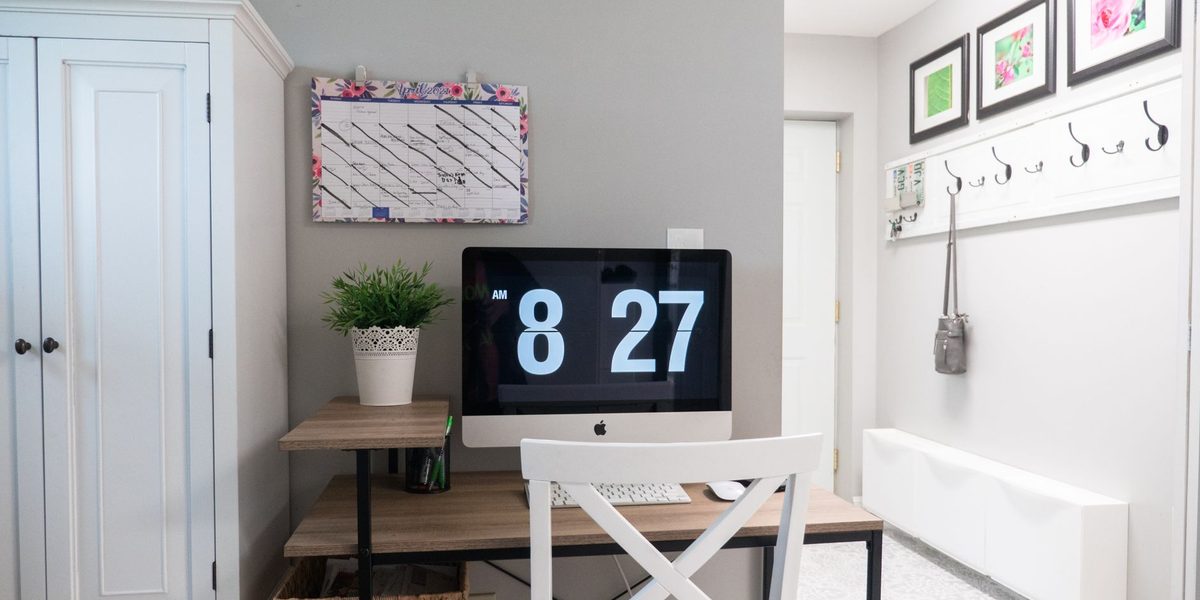
Whatever else the wall holds, its core is one shared calendar big enough to read from across the room, showing at least the current month. Every family member gets a color; every commitment goes on — practices, appointments, work travel, school events, birthdays, the babysitter. Then comes the rule that gives the calendar its power: if it is not on the calendar, it does not exist. Rides do not get arranged, and conflicts are not the household's emergency, for events that never made the wall.
That rule sounds harsh and works gently. Within weeks, everyone — including children — learns to capture commitments the moment they form, which is precisely the habit that ends the double-booked Thursday. Households that also run digital calendars simply designate one as master and sync in one direction during the weekly review, rather than maintaining two rival sources of truth.
Give Paper One Door Into the House
Paper is the command center's second job: the school forms, the invitations, the bills, the flyer that must be remembered for exactly nine days. All of it gets a single entry point — one inbox tray or wall pocket where every piece of incoming paper lands the day it arrives. Not the counter, not the table, not a bag: the inbox.
Then give the inbox a small ecosystem beside it:
- An action pocket for things requiring a signature, payment, or reply — emptied at a fixed weekly moment.
- A per-person pocket for each family member's incoming items, checked on their way through.
- A short-term board — cork or magnetic — for time-limited items like invitations, which get thrown away the day after the event.
- A recycling bin within arm's reach, because most paper's correct destination is immediate disposal, and distance is what builds piles.
Anything needing long-term storage — records, warranties, tax papers — should leave the command center weekly for a real filing spot elsewhere. The wall is a train station, not a warehouse.
Add the Launch Gear and the Lists
The command center earns daily affection by holding the objects that make mornings work: a hook or bowl for each set of keys, a charging point if devices live downstairs overnight, a slot for wallets and transit passes, hooks or cubbies for the bags if the entry is close enough. The principle is one home per object, labeled if the family needs the hint. When the keys have lived in the same bowl for a month, the frantic 7:52 a.m. key hunt simply stops happening.
Then mount the working lists: the running grocery list anyone can add to, the errands list, and — if your household runs on them — the week's dinner plan and the chore rotation. A small whiteboard or a pad on a string both work. The test of a good list placement is whether the person who empties the milk can record it in four seconds without moving their feet much.
Design for the Shortest Person in the House
A command center pitched at adult eye level teaches children that the household's information is not theirs, and then adults wonder why kids never check the calendar. Build low. Put children's pockets, hooks, and any picture-based routine cards at their eye level. Let each child own their color on the calendar and, as soon as they can write, add their own events. A first-grader who marks the class trip herself has begun managing her own life — which is the entire point.
This also means editing for readability: fat markers, big letters, minimal abbreviations. The wall is a public interface, not a private notebook. If a babysitter or visiting grandparent can walk in cold and figure out the family's evening from the wall, you have built it right.
Run the Weekly Reset That Keeps It Alive
Every command center drifts toward becoming a shrine of outdated flyers and orphaned keys unless it is maintained, and maintenance means one short weekly appointment — ten minutes, ideally folded into whatever Sunday or end-of-week rhythm your household already keeps. Empty the action pocket. Purge the board of expired paper. Walk the coming week on the calendar out loud with whoever is nearby. Restock the notepads and working pens; a command center without a working pen is a monument.
The weekly reset is also when the system gets to evolve. If the mail keeps landing on the counter anyway, move the inbox to the counter. If a pocket never gets used, delete it. The command center should fit the family's real behavior like a worn shoe — every part shaped by use, nothing surviving on good intentions alone.
Start Ugly, Then Earn the Upgrade
The biggest threat to a command center is not clutter; it is perfectionism at the start. Families stall for months choosing matching frames and the ideal wall configuration, and the schedule stays in one parent's head the whole time. Reverse the order. This weekend, put up a big paper calendar, one tray, one hook per person, and a pad with a pen on a string. Total cost is minimal and the system starts working immediately.
Live with the ugly version for a month. It will teach you exactly what your family needs — which pockets, what sizes, whether the spot is right — and then the upgrade you buy will be the correct one instead of the aspirational one. Systems earn their aesthetics through use, and a homely wall that runs the household beats a beautiful one nobody reads.
Final Thoughts
A family command center is the household's shared brain: one calendar that tells the truth, one door for paper, one home for the launch gear, and lists anyone can feed. Put it in the traffic, build it low enough for the children, and keep it honest with a ten-minute weekly reset. The payoff arrives quietly — fewer questions routed through one tired adult, fewer surprises at breakfast, and a family that can answer what's happening this week by looking at a wall instead of interrupting a person.