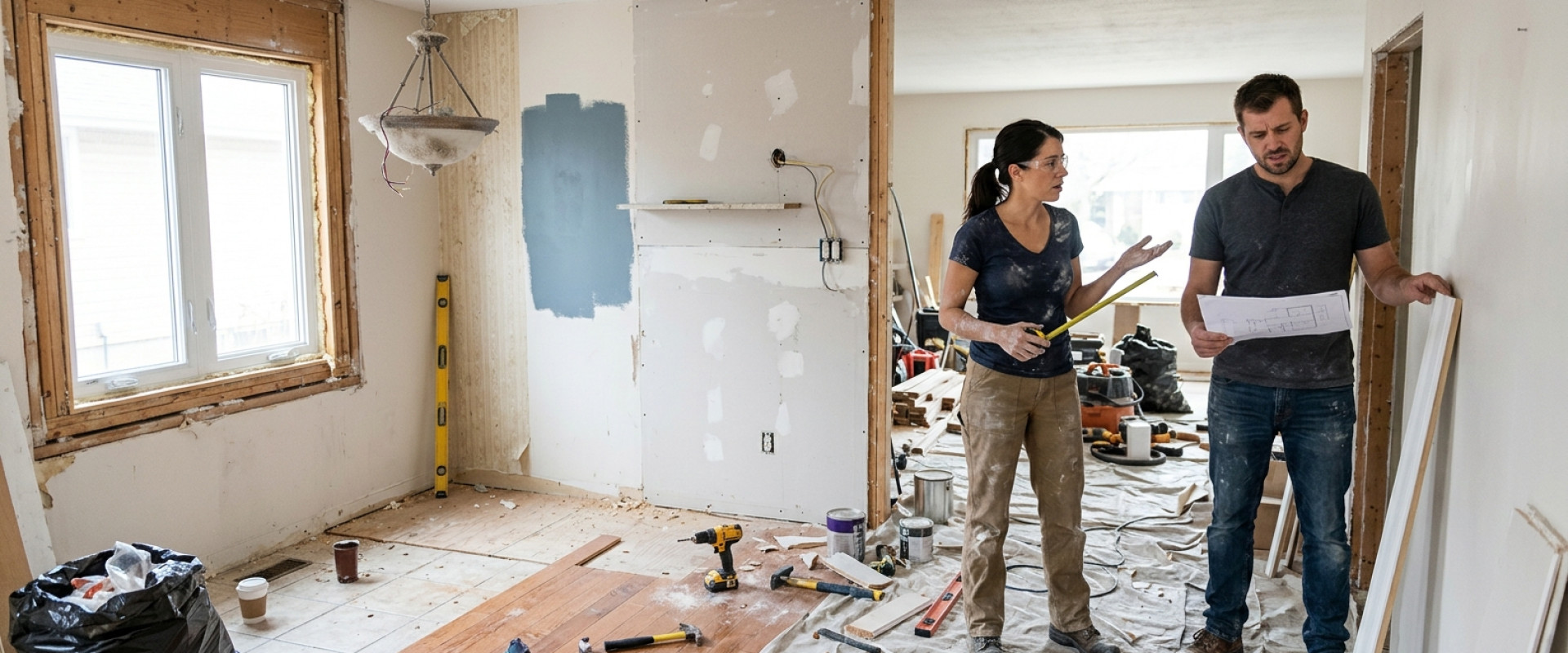
Home renovation projects are exciting opportunities to improve your living space, increase your property value, and make your home more functional. Whether you are tackling a small bathroom refresh or a full kitchen overhaul, the process can quickly become overwhelming, expensive, and stressful — especially when avoidable mistakes creep in. The good news is that most renovation errors follow predictable patterns. By learning what they are ahead of time, you can save yourself thousands of dollars, weeks of frustration, and a great deal of regret. Here are five of the most common home renovation mistakes that homeowners make, along with practical advice on how to avoid each one.
Quick Fact: According to the Harvard Joint Center for Housing Studies, Americans spend over $400 billion annually on home improvements. Yet surveys consistently show that more than half of all renovation projects run over budget or over schedule — often due to preventable mistakes.
Mistake #1: Failing to Set a Realistic Budget
One of the single most common — and most damaging — mistakes homeowners make is starting a renovation without a thorough, realistic budget. Many people underestimate the true cost of a project, leading to financial stress partway through or, worse, an unfinished renovation that sits incomplete for months or years.
Why Underestimating Costs Is So Common
Renovation costs can be deceptive. What appears to be a simple tile replacement can expose rotting subfloor beneath. A bathroom remodel can uncover outdated plumbing that needs to be fully replaced. These hidden costs are not unusual — they are, in fact, expected by experienced contractors. First-time renovators, however, are often caught completely off guard.
Many homeowners also rely on rough online estimates without accounting for local labor costs, material price fluctuations, permit fees, and disposal costs. Online calculators provide ballpark figures, but they cannot predict what will actually be found inside your walls.
How to Budget Correctly
Experts recommend adding a contingency fund of at least 15 to 20 percent on top of your projected renovation costs. This buffer exists specifically to handle surprises without derailing the entire project. For older homes — typically those built before 1980 — budgeting an even larger contingency of 25 percent is a wise precaution, as issues like asbestos, lead paint, or aging electrical systems are more likely to be discovered.
- Get at least three written quotes from licensed contractors before committing.
- Ask contractors to break down costs by labor, materials, and permits.
- Research average material costs independently so you can spot inflated quotes.
- Never spend your entire contingency fund on upgrades — keep it in reserve until the project is complete.
Pro Tip: Use a spreadsheet to track every expense from day one, including small purchases like fasteners, paint samples, and delivery fees. These minor costs add up quickly and are frequently forgotten during the budgeting phase.
Mistake #2: Skipping Permits and Ignoring Building Codes
Pulling permits feels like an unnecessary hassle. It costs money, takes time, and seems to complicate what might appear to be a straightforward project. As a result, many homeowners either skip the permitting process entirely or are simply unaware that their project requires one. This is a serious mistake with significant long-term consequences.
What Requires a Permit?
Building codes and permit requirements vary by municipality, but most jurisdictions require permits for structural changes, electrical work, plumbing modifications, HVAC installations, additions, and significant interior remodels. Even replacing a water heater or adding a deck often requires a permit in many areas.
The specific requirements for your project can be confirmed by contacting your local building department or city hall. Many municipalities now make this information available online, making it easier than ever to check before you begin.
The Real Consequences of Skipping Permits
Doing unpermitted work is not simply a minor technicality. The repercussions can be severe and long-lasting. If unpermitted work is discovered during a home sale, the seller may be required to either tear out the work, have it inspected and brought up to code, or dramatically reduce the sale price of the home. Buyers may also walk away from the deal entirely.
Additionally, unpermitted work may void your homeowner's insurance policy if damage occurs. If a fire starts due to improperly installed electrical wiring that was done without a permit, your insurance company may deny the claim entirely.
Warning: Some contractors will offer to do work "under the table" without permits to save money. While this may seem attractive upfront, the homeowner — not the contractor — is typically held responsible for any unpermitted work found in the home.
Mistake #3: Hiring the Wrong Contractor
Your contractor is arguably the most important factor in determining whether your renovation succeeds or fails. Yet many homeowners make hasty decisions when hiring, choosing based on price alone or failing to do adequate research. The result is often substandard work, missed deadlines, budget overruns, and in some cases outright fraud.
Red Flags to Watch For
Not every contractor who appears professional actually is. There are several warning signs that should cause you to pause before signing any agreement. Be cautious of contractors who:
- Request a large upfront payment — typically more than 30 percent of the total project cost.
- Cannot provide proof of licensing and insurance upon request.
- Offer quotes that are dramatically lower than other bids without a clear explanation.
- Pressure you to sign contracts immediately or offer "today only" pricing.
- Lack verifiable reviews or references from previous clients.
- Want to be paid exclusively in cash.
How to Hire the Right Professional
Always verify that a contractor holds a valid state or local license before any work begins. Most state licensing boards maintain searchable online databases where you can confirm a contractor's credentials and check for any disciplinary history.
Request and actually contact at least two or three references from recent projects similar in scope to your own. Visit a completed project in person if the contractor and previous client are both agreeable. This gives you a firsthand look at the quality of work you can expect.
Ensure that every agreement is put in writing in a detailed contract. The contract should specify the full scope of work, project timeline, payment schedule, materials to be used, and the process for handling any changes or unexpected issues.
Pro Tip: Check contractor reviews on multiple platforms, including Google, the Better Business Bureau, Houzz, and Angi. A single negative review is not necessarily a dealbreaker, but patterns of similar complaints — especially about communication or incomplete work — should be taken seriously.
Mistake #4: Underestimating the Timeline
Renovation timelines almost always take longer than homeowners initially expect. What starts as a "quick two-week kitchen remodel" frequently stretches into six weeks or more. This creates significant disruption to daily life, particularly when essential spaces like kitchens or bathrooms are involved, and can lead to costly short-term accommodations or unnecessary stress.
Why Projects Take Longer Than Expected
Several factors routinely extend renovation timelines beyond original estimates. Material delays are extremely common, particularly in the wake of global supply chain disruptions. Specialty items like custom cabinetry, specific tile patterns, or unique fixtures can take weeks or even months to arrive.
Contractor scheduling conflicts are another frequent culprit. Skilled tradespeople are in high demand, and they often work on multiple projects simultaneously. If a subcontractor is delayed on another job, your project stalls as well. Permit inspections also take time and may require work to pause while waiting for an inspector to become available.
Planning for a Realistic Timeline
When a contractor gives you a projected timeline, add a buffer of at least 25 to 30 percent to your mental expectation. If a bathroom renovation is estimated at four weeks, plan your life around a five- to six-week project. This mindset helps avoid frustration and allows you to make adequate temporary arrangements.
Order materials as early as possible — well before construction is scheduled to begin. This is particularly important for custom or imported items. Having materials on-site and ready before work starts is one of the most effective ways to prevent unnecessary delays mid-project.
- Establish clear milestone dates with your contractor in the written contract.
- Include provisions in the contract for what happens if deadlines are not met.
- Communicate proactively with your contractor to identify delays early.
- Avoid making major design changes once work has begun, as changes almost always extend the timeline significantly.
Warning: If you are renovating before a major life event — such as a move-in date, a holiday gathering, or a home sale — build in an even more generous timeline buffer. Attempting to rush renovation work is one of the leading causes of poor-quality results and cost overruns.
Mistake #5: Prioritizing Aesthetics Over Function and Structure
It is natural to be drawn to the visual elements of a renovation — the cabinet finishes, countertop materials, paint colors, and decorative hardware. These are the features that show up beautifully in magazine photos and social media posts. However, focusing too heavily on aesthetics while neglecting function, structural integrity, and essential systems is a mistake that can prove costly in the long run.
Beauty Without Function Creates Problems
Many homeowners allocate the bulk of their renovation budget to high-end cosmetic upgrades while underspending on critical infrastructure. Installing a stunning custom kitchen with top-of-the-line appliances means very little if the plumbing beneath the sink has not been updated and begins leaking within a year. Beautiful hardwood floors lose their appeal quickly if the subfloor beneath them was not properly leveled or repaired before installation.
Similarly, some design choices that look spectacular fail to hold up to the realities of daily life. White grout in a high-traffic bathroom, open shelving in a household with young children, or a glossy paint finish in a hallway that receives heavy contact are all examples of aesthetic choices that may require significantly more maintenance than their alternatives.
Getting the Order of Priorities Right
Experienced renovation professionals consistently advise homeowners to address structural and mechanical systems first, before any cosmetic work begins. This means ensuring the roof is sound, the foundation is stable, the electrical panel is up to code, the plumbing is functioning properly, and insulation is adequate. These are not glamorous upgrades, but they protect the value and safety of your home over the long term.
A useful framework is to think of your renovation budget in layers: structural integrity first, essential systems second, functional layout third, and aesthetics last. When budget cuts must be made, they should come from the aesthetic layer rather than from the foundational elements of the project.
- Have a licensed inspector evaluate your home before beginning renovations to identify any structural or mechanical issues.
- Ask your contractor about functional considerations before finalizing any aesthetic decisions.
- Choose durable, easy-to-maintain materials for high-traffic areas, even if they are slightly less visually dramatic.
- Consider the resale appeal of your choices — extremely personalized design decisions may appeal to your taste but limit buyer interest in the future.
Pro Tip: A good interior designer can actually help you make more cost-effective aesthetic choices, not just expensive ones. Many designers have trade access to materials at discounted prices and can help you achieve a high-end look within a realistic budget while still prioritizing function.
Final Thoughts
Home renovations are some of the most significant investments homeowners will ever make, both financially and emotionally. The five mistakes outlined in this article — underbudgeting, skipping permits, hiring the wrong contractor, underestimating timelines, and prioritizing aesthetics over function — are remarkably common, but they are also entirely avoidable with proper planning and informed decision-making.
Taking the time to research thoroughly, hire qualified professionals, secure the necessary permits, build in financial and scheduling buffers, and address your home's structural needs before its cosmetic ones will put you in a far stronger position to complete your renovation successfully. The result will be a home that not only looks great but also functions well, holds its value, and stands the test of time.
Renovation challenges are inevitable, but with the right preparation, they become manageable obstacles rather than project-ending disasters. Approach your next home renovation with patience, diligence, and realistic expectations — and you will be far more likely to end up with a result you are genuinely proud of.