Decluttering alone while the family is out is fast, satisfying, and almost always a mistake. The missing toy becomes a betrayal, the partner's discarded box resurfaces in an argument months later, and — most costly of all — nothing about the household's habits changes, so the clutter grows right back. Decluttering as a family is slower and occasionally noisier, but it is the only version that lasts, because the people who create the clutter are the ones who learn to manage it. The trick is structuring the process so it does not dissolve into meltdowns, standoffs, and a hallway full of half-sorted boxes.
Agree on the Why Before You Touch a Thing
Decluttering announced as a verdict — this house is a disaster and we're fixing it Saturday — puts everyone on the defensive before a single drawer is opened. Start instead with the payoff, framed in terms each person actually values. For a child, that might be a floor clear enough to build the big train track. For a teenager, a room that feels less babyish. For adults, a garage that fits the car or a calmer twenty minutes before guests arrive.
One short conversation is enough: here is what we are doing, here is what each of us gets out of it, and here is the promise — nobody's things get thrown away behind their back. That promise is the foundation of the entire project. The moment someone's belongings disappear without their say, you lose their cooperation for years, and children in particular have long memories for a vanished stuffed animal.
Work in Short Sessions, Not Marathon Weekends
The all-day decluttering blitz is a trap. Energy collapses by early afternoon, decisions get worse as fatigue sets in, and the day usually ends with boxes of deal with later scattered through the house — which is just clutter with extra steps. Families do far better with short, bounded sessions: forty-five minutes to an hour, one zone, then done.
One zone means one zone. The coat closet. The toy shelves. The Tupperware cupboard. Finishing a small area completely delivers a visible win that fuels the next session, while a half-done whole house delivers only discouragement. A family that does one focused session each weekend will transform the home in a season, without a single lost Saturday or end-of-day meltdown from anyone, adult or child.
Use Categories a Child Can Understand
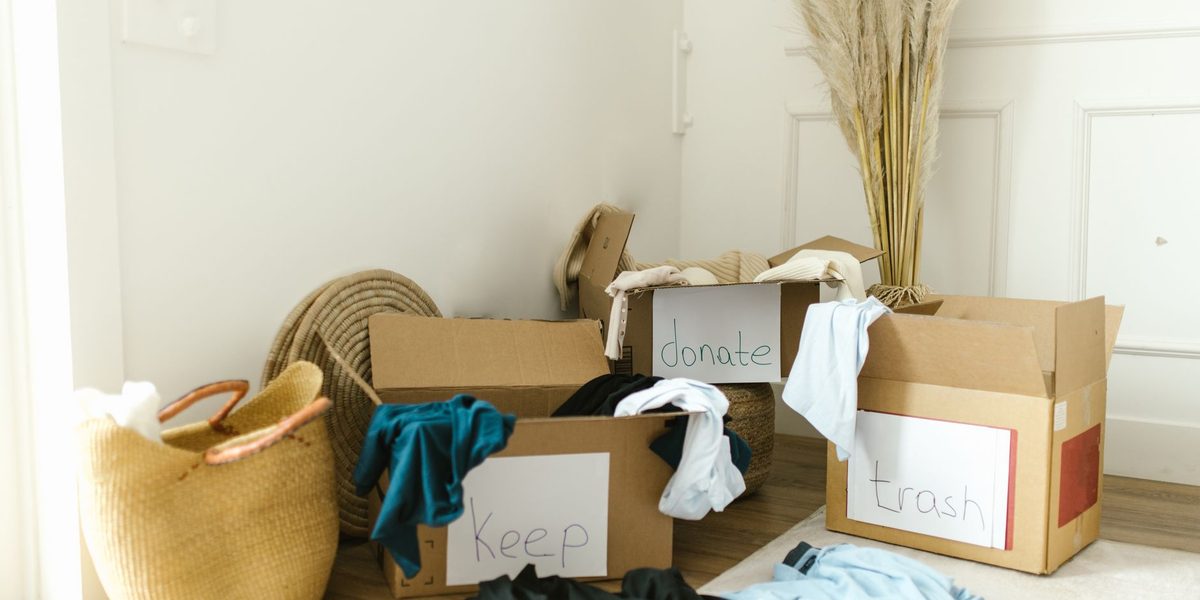
Vague decluttering questions produce vague results, and asking a six-year-old whether a toy sparks joy produces a firm yes for every object she has ever owned. Simpler sorting works better for all ages. Set out three boxes and keep the definitions concrete.
- Keep: I use it or truly love it, and it will have a home on a shelf or in a bin.
- Give: it is still good, and another family will use it more than we do.
- Toss: broken, missing pieces, or worn out beyond donating.
The give framing matters enormously with children. Giving a toy to a child who will play with it is generous and even a little grown-up; losing a toy is simply loss. Some families let kids hand the donation bag over at the drop-off themselves, which turns the ending of the process into something to be proud of rather than mourned.
Everyone Rules Their Own Kingdom
A workable family rule: you have full authority over your own things, and only your own things. Parents do not secretly cull the toy bins; partners do not editorialize about each other's hobby gear; teenagers' rooms are theirs to sort with support, not subject to raids. Shared items — kitchenware, games, the hallway bench's mysterious contents — get decided together.
This rule feels slow, because the sentimental hoarder in the family (every family has one) will keep more than you would choose. Let them. The alternative — decluttering by force — wins one afternoon and loses the war, because a person who feels robbed will defend every object twice as hard next time. People become genuinely willing to let go at their own pace, and the pace accelerates dramatically once they trust that the choice is really theirs.
Handle Sentiment With a Container, Not a Debate
Every declutter eventually hits the painful category: the baby clothes, the trophies, the drawings, the sweater that belonged to someone missed. Do not argue an item's importance — feelings are not negotiable, and the argument itself poisons the session. Give sentiment a container instead. Each family member gets one memory box, clearly labeled, kept somewhere safe. If it matters enough to keep forever, it matters enough to live in the box; when the box fills, its owner chooses what stays.
The container does quietly what the debate never could: it forces a ranking. Most people discover that honoring ten treasures feels better than storing two hundred half-remembered objects — but they need to discover it themselves, and the box gives them the structure to do it.
Get It Out of the House the Same Day
A donation bag that lingers in the hallway is an unexploded negotiation — someone will re-open it, second thoughts will strike, and half the contents will migrate back. The session is not finished until the boxes leave. Toss goes to the bin immediately. Give goes into the car trunk immediately, and the drop-off happens on the next errand run, ideally the same day.
Build this into the session's timing: forty-five minutes of sorting, fifteen minutes of removal. The house should be measurably lighter by dinnertime, not theoretically lighter pending a future trip. Momentum in decluttering is fragile, and physical departure of the stuff is what makes progress feel real to everyone — especially the skeptics. If selling items is part of your plan, be ruthless about the timeline: photograph and list things within the week, and agree that anything unsold after a month gets donated. A garage full of merchandise waiting for buyers is not decluttering; it is a storage unit you live with. For most families, the money recovered rarely justifies the months of lingering boxes, and donation delivers the finished feeling that keeps the project moving.
Change the Inflow or Do It All Again Next Year
Decluttering fails as an event and succeeds as a rhythm, because homes refill. Once the big sort is done, protect it with small standing habits. A one-in-one-out rule for toys and clothes keeps volume flat: a new game arriving means an old one is chosen for donation. A permanent donation box in a closet gives outgrown things somewhere to go the moment they are outgrown, instead of drifting back onto shelves. A quick seasonal pass — an hour per bedroom at clothing changeover — catches growth before it becomes a project again.
Watch the acquisition side, too. Much family clutter arrives as impulse purchases and party-bag debris. Nothing dramatic is required; simply noticing out loud what comes through the door, and involving kids in the noticing, slowly builds the household's immune system against stuff.
Final Thoughts
Decluttering as a family runs on consent, short sessions, and same-day removal. Respect ownership absolutely, give sentiment a box instead of a fight, and treat the donation run as part of the session rather than an afterthought. It will take more weekends than doing it alone — and it will be the last time you have to do it at this scale, because this version changes the people along with the shelves. A home that everyone helped lighten is a home everyone helps keep light.