Flying with one child is a project. Flying with a toddler, a nine-year-old, and a teenager at the same time is a logistics operation, because every age needs something different at every stage of the day. The toddler needs naps and constant supervision, the nine-year-old needs stimulation and snacks, and the teenager needs autonomy and a charged phone. The good news is that a flight day is remarkably predictable: you know the stages, you know roughly how long each will take, and you can plan for the friction points before you ever leave the house. Families who fly well are not lucky. They have simply decided in advance who is responsible for what, what each child will carry, and what happens when the day goes sideways. Here is how to build that plan.
Assign Every Adult a Child, Not a Task
The single most useful decision happens before you book anything: pair each adult with specific children rather than dividing chores. When one parent is in charge of boarding passes and the other is in charge of bags, both assume the other has eyes on the four-year-old, and that is exactly how children wander off at security. Instead, one adult owns the toddler for the whole day, another owns the middle kid, and the teenager owns themselves with a check-in rule. Tasks like documents and bags get attached to a person second, after every child has a designated adult.
If you are a solo parent flying with multiple kids, the same principle applies in modified form: the oldest capable child gets deputized as a buddy for a younger sibling, with a clear, limited job such as holding hands from gate to seat. Kids usually rise to a specific responsibility and drift without one.
Book Seats Around the Hardest Hour
Choose seats by asking one question: where will the hardest hour of this flight happen, and who needs to be within arm's reach when it does? A toddler mid-flight is the usual answer, so the adult with the most patience for lap games sits beside them, ideally with the window so the child has a wall, a view, and no aisle to escape into. The middle schooler does well one row up or across the aisle, close enough to hand snacks to, far enough to feel independent. Teenagers often prefer a seat slightly apart, and letting them have it costs you nothing while buying real goodwill.
If the airline scatters your seats, do not panic and do not rely on mid-flight diplomacy. Address it at check-in and again at the gate, calmly and early. Gate agents solve family seating problems all day, and the earlier you ask, the more options they have.
Pack Carry-Ons by Owner, Not by Category
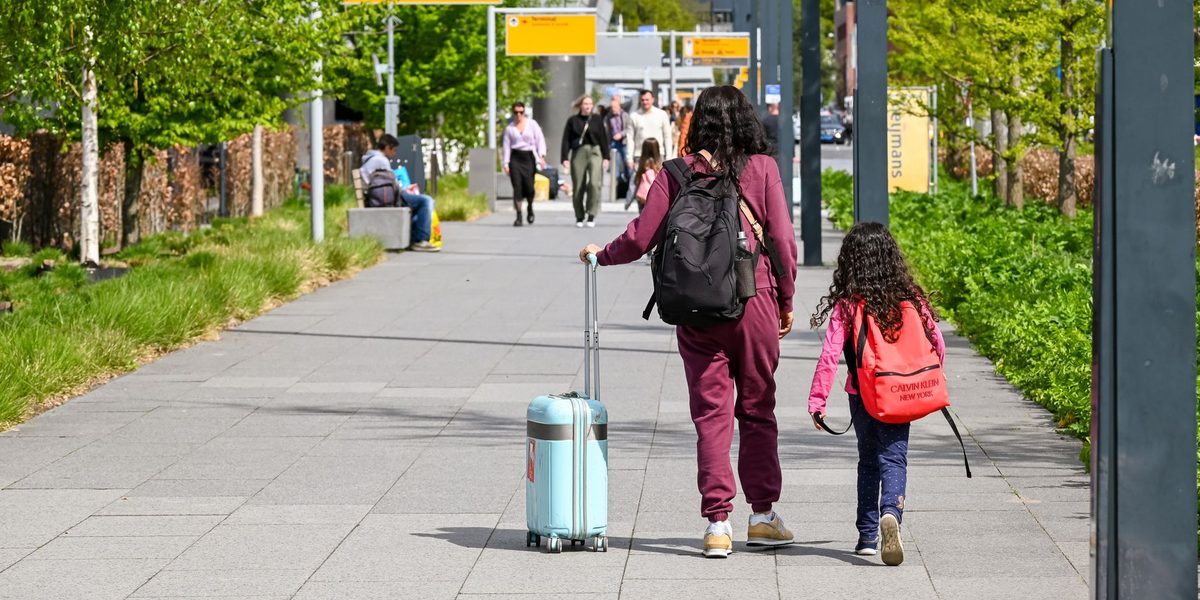
The classic mistake is packing one giant family bag where everything lives together, so every request requires an archaeological dig over two seatbacks. Pack instead by owner. Each child who can walk carries a small backpack with their own entertainment, one snack, an empty water bottle, and a comfort item. The supervising adult carries the escalation bag: extra snacks, wipes, a full change of clothes for the youngest, basic medicine, and one surprise activity per child that they have never seen before.
A few rules keep the system honest:
- If a child packs it, a child carries it. This trims wish lists fast.
- Every bag gets a luggage tag, including the tiny ones, because tiny bags are the ones left at gates.
- Chargers and documents live with an adult, always, no exceptions.
- The surprise items stay hidden until cruising altitude. Novelty is fuel; do not burn it in the terminal.
Pace the Airport Like a Series of Camps
Arrive earlier than you think you need to, then treat the extra time as an asset instead of a wait. Think of the airport as a series of camps: security camp, bathroom camp, food camp, gate camp. Moving deliberately from one to the next gives the day structure and keeps younger kids from melting down at the general shapelessness of waiting. Build in a movement stop, because the airport is your last chance to drain physical energy before everyone is strapped into a seat. An empty gate area two doors down is a perfectly good running track for a five-year-old, and a walking loop of the concourse does wonders for restless kids and stiff adults alike.
Feed everyone a real meal before boarding, even if the timing feels odd. Plane food, where it exists at all, should be a bonus, never the plan, and hungry children at thirty thousand feet have no patience for logistics.
Fly the Flight in Chapters
Once aboard, break the flight into chapters rather than enduring it as one block: takeoff and settling, activity time, food time, quiet or nap time, and the final descent. Announce the chapters to younger kids, because a child who hears that quiet time comes after snacks will often hold it together far better than one facing an endless undifferentiated flight. Save screens for the middle chapters; if the tablet comes out during boarding, you will have spent your strongest card before the flight even starts.
For babies and toddlers, plan around ears and sleep. Something to suck or sip during climb and descent helps ears equalize, and if the flight overlaps a nap window, protect it: settle the child early, dim what you can, and let seatmate chatter wait. For older kids, a whispered game, a shared window, or simply narrating what is out the glass carries more of the flight than parents expect.
Decide in Advance How You Handle the Bad Moments
Something will go wrong: a tantrum during boarding, a spilled drink, a delay that eats the layover. Decide now how you respond, because the plan you make at home is calmer than the one you improvise while strangers watch. If the toddler screams, one adult takes them to the back of the plane or the empty galley area to reset while the other holds the seats. If a delay hits, the family moves to camp mode near the gate, snacks come out on a schedule, and one adult handles rebooking while the other runs the kids.
Also brief the kids on their part. Even a young child can learn the rule that if they are ever separated from the family, they stop where they are and find a worker behind a counter. Rehearse it once, lightly, without fear. Prepared kids are calmer kids.
Plan a Soft Landing, Literally
The flight is not over at touchdown. Baggage claim, ground transport, and the first hour at the destination are where tired families fall apart, so give that stretch the same planning attention as the flight itself. Know how you are getting from the airport to your lodging before you land, keep one last round of snacks in reserve for the wait at the carousel, and lower your ambitions for the rest of the day. If you land in the afternoon, the evening plan is food, showers, and beds, not a museum. Kids adapt to new places quickly, but only after they have eaten and slept.
If the trip crosses time zones, start nudging everyone toward local time with light and meals from the first day, and accept that the youngest travelers will take a few days to fully arrive. Building an easy first morning into the itinerary is not lost vacation time; it is what makes the rest of the vacation possible.
Final Thoughts
A smooth family flight day is not the one with no crying. It is the one where the crying was anticipated, contained, and forgotten by dinner. Pair every child with an adult, seat people around the hardest hour, pack by owner, move through the airport in deliberate stages, and fly the flight in chapters with your best material held in reserve. None of it requires spending more; all of it requires deciding things earlier. Do the deciding at your kitchen table, and the airport becomes something close to manageable, and occasionally, when the window seat lights up at takeoff, something close to magic.