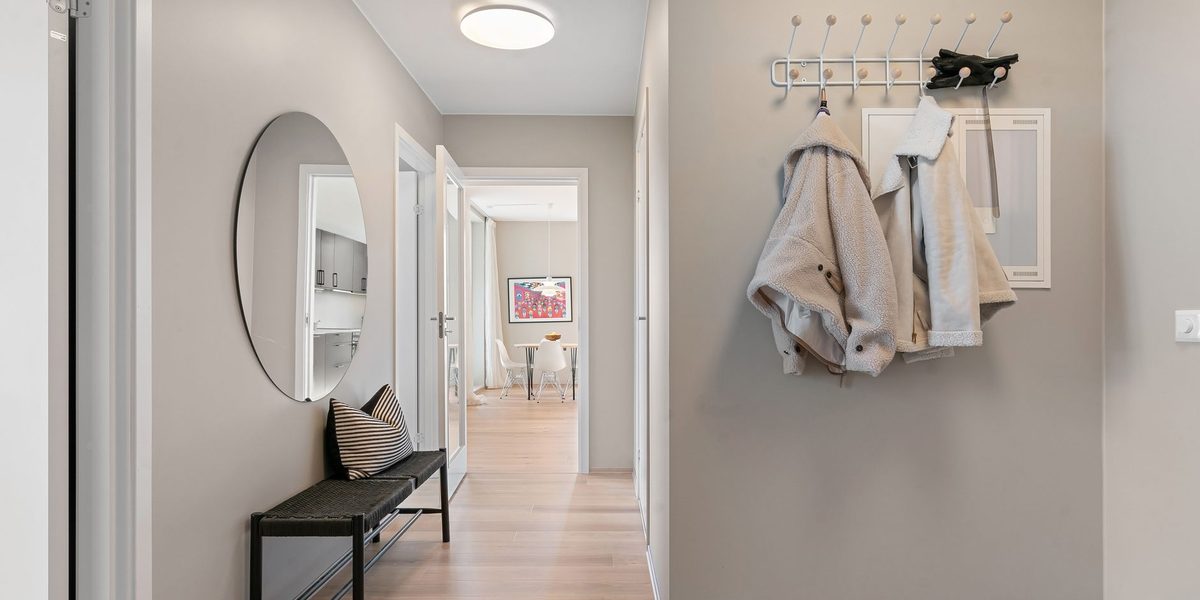
Every home has a spot just inside the door where the day gets dumped — shoes kicked into a drift, backpacks sliding off the bench, coats draped over the banister, keys and mail scattered across whatever surface presents itself. It is the most honest square footage in the house: a precise record of everyone's arrival, preserved until someone snaps and clears it. The entryway earns this chaos because it sits at the exact moment when the family's energy is lowest — the walk-in, arms full, day done. Fighting that moment with willpower fails every time. What works is a drop zone: a deliberately designed landing strip that accepts the dumping instinct and gives every dumped object a home within arm's reach of the door.
Accept the Physics of Arrival
The foundational insight is that people will always shed their cargo within a few steps of the door. No amount of instruction relocates this behavior to bedroom closets, because carrying things deeper into the house costs effort at the day's least-resourced moment. Households that fight the physics assign blame; households that use the physics install infrastructure exactly where the shedding already happens.
So begin by watching, not shopping. For a few days, notice what actually crosses the threshold and where it lands: how many pairs of shoes accumulate, which bags, whose coats, what paper, which sports gear in which season. The pile is your requirements document. A drop zone designed from the real inventory works from day one; one designed from a catalog photo of somebody else's mudroom starts failing the first rainy Tuesday.
Give Every Person a Territory
The single most effective drop-zone move is dividing it by person rather than by object type. A shared coat closet and a communal shoe pile diffuse responsibility to nobody; a labeled hook-and-cubby per family member concentrates it exactly. Each person — including the adults, whose example carries the system — gets a hook or two at their own height, a shoe spot, and a bin or cubby for their loose cargo: the gloves, the headphones, the library book in transit.
Personal territory changes the maintenance conversation completely. Your cubby is overflowing is specific, fair, and fixable by exactly one known person; this entryway is a disaster is an accusation against the weather. Children respond to owned space with surprising pride — the same child who abandons shoes mid-floor will use a cubby with their name on it, because territory triggers the ownership instinct that a communal heap never touches.
Build for the Worst Season, at Kid Height
An entryway designed for its best day fails at its first wet one. Size the system for peak load: winter's coats are triple the bulk of summer's, boot season needs a tray that can hold water and mud, and the sports calendar sends home bags that fit no ordinary hook. Practical anchors for most families:
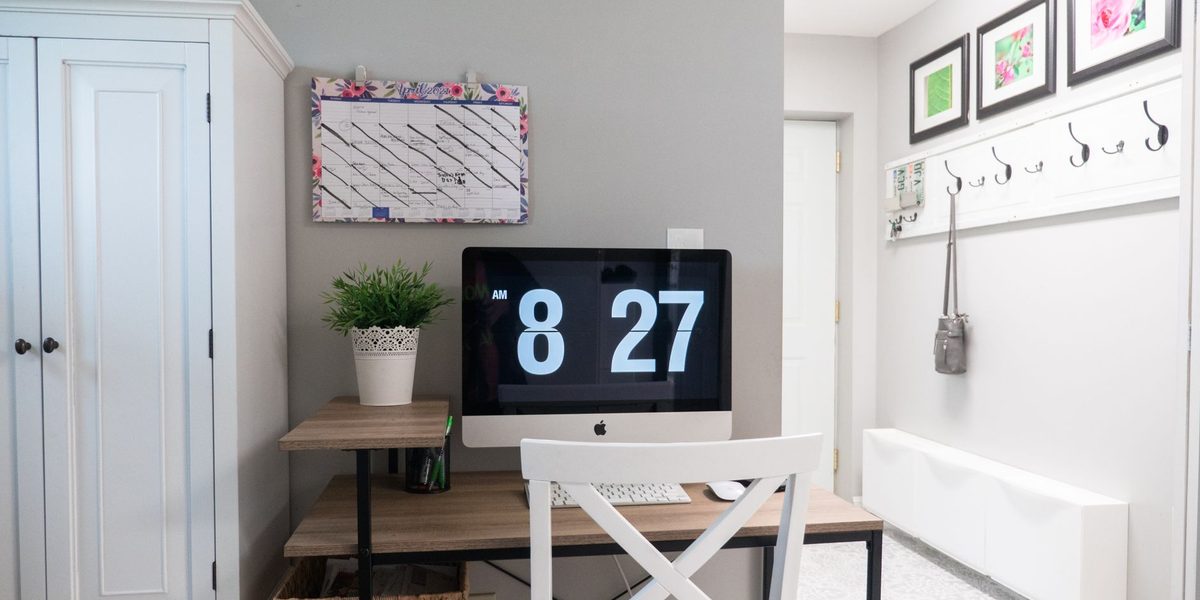
- Hooks over hangers — a child will use a hook forever and a hanger never; mount a low row for kids and a high row for adults.
- An open shoe solution — a tray, low shelf, or bench-with-cubbies beats a closed cabinet, because closed doors lose to tired arrivals; keep a one-or-two-pairs-per-person limit at the door with overflow living in closets.
- A bench or stool — shoes go on and off twice daily, and somewhere to sit is what keeps the process out of the middle of the floor.
- A high shelf or bowl for the small critical items — keys, wallets, sunglasses — placed where they are unmissable on the way out and unreachable by toddlers.
If the entry is tiny, think vertically and nearby: hooks climb walls, shoe storage slides under adjacent furniture, and a hallway closet three steps away can hold each person's overflow bin as the drop zone's back room.
Route the Paper and the Stuff-in-Transit
The entryway is also a customs checkpoint: mail, school papers, packages, and borrowed things all enter here, and whatever is not routed at the border migrates to the kitchen counter. Give the zone a small routing station — a tray or wall pocket where incoming paper lands for the household's regular processing, a recycling-bound spot for the junk layer, and one outbox: a basket or shelf for everything that must leave the house — returns, borrowed dishes, library books, the signed form.
The outbox deserves special affection, because it solves the reverse problem nobody designs for: things that need to exit. An errand that lives as a pile by the door gets shuffled and forgotten; an errand that lives in the outbox gets grabbed on the way to the car. Pair it with the household rule that nobody leaves empty-handed if the outbox is full, and the house develops a slow, steady exhale of borrowed and outbound stuff.
Install the Two-Minute Arrival Routine
Infrastructure without habit is just furniture, and the habit here is small enough to teach in a week: the arrival routine. Walk in, and before anything else — snack, sofa, screen — shoes to the spot, coat to the hook, bag to the cubby, papers to the tray, keys to the bowl. Two minutes, every entry, every person. For children, frame it as the same kind of transition ritual school already taught them; they hang coats in classrooms all day and will do it at home the moment home expects it as consistently as school does.
The enforcement is gentle and structural rather than nagging: the snack and the screen simply follow the routine, in that order, every time. Adults model it visibly — a parent whose coat lives on a chair is running an unanswerable counterargument. And on the genuinely crushed evenings, the shrunk version still holds: shoes and keys, minimum. The routine surviving in miniature is what keeps it alive at full size the rest of the week.
Reset It Weekly Before It Silts Up
Even a working drop zone accumulates sediment — the outgrown jacket, the fourth pair of shoes, the season's dead gloves, the cubby stuffed to archaeology. Give the zone a five-minute slot in whatever weekly reset rhythm the household already runs: everyone empties their own cubby to zero, overflow shoes go back to closets, the outbox gets loaded into the car, and anything homeless gets a decision instead of a deferral.
Twice a year, at the season change, do the deeper flip — winter gear in or out, hook heights adjusted for grown children, the inventory re-checked against real life. Entryways drift because families drift: the toddler becomes a soccer player, the commuter starts cycling. Five minutes of seasonal redesign keeps the zone matched to the family it serves, which is the entire difference between a system and a shrine.
Final Thoughts
The entryway pile is not a discipline problem; it is a design vacancy. Fill it: a territory per person at the right height, seating for the shoe ballet, a bowl for the keys, a border checkpoint for paper, an outbox for the leaving things, and a two-minute arrival routine that makes the whole apparatus run itself. Build it from what actually crosses your threshold and maintain it five minutes a week. The reward is felt twice daily, at the day's two hinge moments: leaving becomes a smooth sweep instead of a hunt, and coming home stops beginning with a small avalanche of everyone's day. Few home projects return this much calm for one weekend of hooks and bins — start with the watching, and let your own doorway write the plan.